 English
 Español
 Deutsch
Content
- 1 Understanding Three-Phase Power and Hybrid Inverter Technology
- 2 Key Advantages of Three-Phase Hybrid Inverters
- 3 How Three-Phase Hybrid Inverters Manage Energy Flow
- 4 Technical Specifications and Sizing Considerations
- 5 Applications Where Three-Phase Hybrid Inverters Excel
- 6 Installation Requirements and Electrical Considerations
- 7 Advanced Features and Smart Energy Management
- 8 Cost Considerations and Return on Investment
Understanding Three-Phase Power and Hybrid Inverter Technology
A three-phase hybrid inverter represents an advanced power conversion device that combines the functionality of grid-tied solar inverters with battery storage management capabilities, specifically designed for three-phase electrical systems. To understand its significance, we must grasp what three-phase power means. Unlike single-phase power that delivers electricity through two wires (one live and one neutral) with voltage oscillating in a single sine wave, three-phase power utilizes three separate conductors carrying alternating current with waveforms offset by 120 degrees from each other. This configuration provides smoother, more consistent power delivery with significantly higher capacity and efficiency, making it the standard for commercial buildings, industrial facilities, and increasingly for larger residential properties with substantial energy demands.
The hybrid aspect of these inverters distinguishes them from standard grid-tie or off-grid inverters by incorporating multiple operational modes and energy management capabilities. Hybrid inverters can simultaneously manage solar panel input, battery charging and discharging, grid connection, and load supply—all while intelligently directing power flow based on programmed priorities, energy costs, and real-time conditions. For three-phase applications, this means the inverter must balance power across all three phases while managing these complex energy flows, requiring sophisticated control algorithms and robust power electronics. The result is a versatile system capable of solar self-consumption, providing backup power during outages, optimizing energy costs through time-of-use strategies, and ensuring balanced loading across all three phases to prevent equipment damage and maintain electrical code compliance.
Key Advantages of Three-Phase Hybrid Inverters
Three-phase hybrid inverters offer numerous advantages over their single-phase counterparts, particularly for properties with higher power requirements or specific electrical infrastructure. Understanding these benefits helps determine whether the additional investment in three-phase technology makes sense for your particular application.
Higher Power Capacity and Efficiency
The fundamental advantage of three-phase systems lies in their ability to deliver substantially more power through the same wire gauge compared to single-phase configurations. For a given conductor size and voltage level, three-phase power can transmit approximately 1.73 times more power than single-phase, enabling higher-capacity solar installations without requiring prohibitively large electrical infrastructure. This efficiency extends to the inverter itself—three-phase inverters typically achieve higher conversion efficiencies, often reaching 97-98% peak efficiency compared to 95-96% for comparable single-phase units. The improved efficiency results from more constant power delivery and reduced current ripple, which minimizes losses in power conversion components and generates less heat requiring dissipation.
Balanced Load Distribution
Properties with three-phase electrical service benefit from balanced power distribution across all phases, preventing the overloading scenarios that can occur when large loads concentrate on a single phase. Three-phase hybrid inverters automatically balance their output across the three phases, ensuring that solar generation and battery discharge contribute evenly to the electrical system. This balanced distribution reduces stress on electrical infrastructure, minimizes neutral conductor currents that can cause overheating, and prevents voltage imbalances that might damage sensitive equipment. For commercial facilities running three-phase motors, machinery, or HVAC systems, this balanced power delivery proves essential for equipment performance and longevity.
Smoother Power Delivery
The phase offset in three-phase systems means that when one phase reaches its peak voltage, the others are at different points in their cycles, resulting in more constant total power delivery. This characteristic translates to reduced vibration and noise in motors, more stable operation of sensitive electronics, and decreased stress on power conversion components within the inverter itself. The smoother power flow also means smaller energy storage components are needed within the inverter to filter power ripple, potentially reducing costs and improving reliability through simpler circuit designs with fewer components subject to failure.
How Three-Phase Hybrid Inverters Manage Energy Flow
The sophisticated energy management capabilities of three-phase hybrid inverters set them apart from simpler inverter technologies. These devices continuously monitor and control power flow between four potential sources and destinations: solar panels, battery storage, the electrical grid, and connected loads. The inverter's control system makes millisecond-level decisions about power routing based on programmed priorities and real-time conditions.
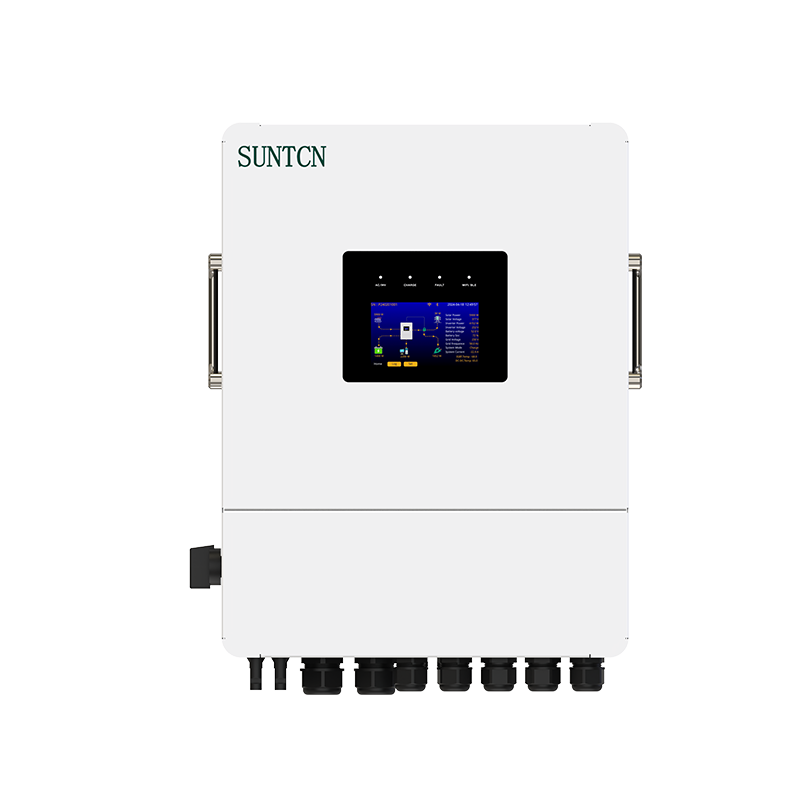
During typical daytime operation with adequate solar production, the inverter directs solar power to meet immediate household or facility loads across all three phases. Any excess production beyond current consumption charges the connected battery system until batteries reach full capacity. Once batteries are full and loads are satisfied, remaining excess exports to the grid if net metering is available and enabled. This priority scheme maximizes self-consumption of solar energy, reducing grid dependence and electricity costs while ensuring batteries remain charged for later use.
When solar production drops below load requirements—during cloudy conditions, morning and evening hours, or nighttime—the hybrid inverter seamlessly draws from battery storage to supplement solar and reduce grid consumption. The system can be programmed to preserve battery capacity for backup purposes, only discharging to a specified state of charge, or to fully utilize batteries for cost optimization. Advanced models support time-of-use programming that charges batteries during off-peak low-cost periods and discharges during expensive peak rate windows, economic benefits in areas with time-varying electricity pricing.
Technical Specifications and Sizing Considerations
Properly sizing a three-phase hybrid inverter requires careful analysis of multiple factors including total energy consumption, peak power demands, phase balance, battery capacity, and solar array size. Understanding key specifications helps ensure the selected inverter meets both current needs and allows for potential future expansion.
| Specification | Typical Range | Importance |
| Continuous Output Power | 10-50 kW per phase | Must exceed average load across all phases |
| Peak/Surge Power | 150-200% of continuous | Handles motor starting and inrush currents |
| Solar Input | 15-65 kW DC | Determines PV array size |
| Battery Voltage Range | 120-500 VDC | Defines compatible battery systems |
| Efficiency | 97-98.5% | Affects energy losses and heat generation |
| Grid Voltage | 380-480 VAC (line-to-line) | Must match local three-phase grid standards |
The continuous output power rating represents the sustained power the inverter can deliver indefinitely across all three phases without overheating or triggering protective shutdowns. Sizing this appropriately requires analyzing peak demand periods—times when the equipment operates simultaneously. For commercial facilities, this often occurs during business hours with full HVAC, lighting, and equipment loads. Residential applications might peak during early evening when cooking, heating/cooling, and multiple appliances run concurrently. The inverter should be rated at least 20-30% above typical peak demands to provide margin for unexpected surges and future load growth.
Battery capacity selection depends on backup duration requirements and economic optimization goals. For emergency backup focusing on critical loads, calculate daily consumption of essential circuits and multiply by desired autonomy days, typically 1-3 days for applications. For economic optimization without extended backup needs, battery capacity often ranges from 50-150% of daily consumption, allowing the system to shift loads between rate periods and maximize self-consumption of solar production. Larger battery banks provide greater flexibility but require proportionally higher investment with diminishing returns beyond certain thresholds.
Applications Where Three-Phase Hybrid Inverters Excel
While single-phase systems suffice for many residential applications, certain use cases particularly benefit from three-phase hybrid inverter technology. Recognizing these scenarios helps determine when the additional complexity and cost prove worthwhile.
- Commercial and industrial facilities al universally employ three-phase electrical service to power machinery, large HVAC systems, commercial refrigeration, and other high-capacity equipment. Three-phase hybrid inverters integrate seamlessly with existing electrical infrastructure while providing comprehensive energy management across all phases.
- Agricultural operations including farms, vineyards, and processing facilities frequently utilize three-phase power for irrigation pumps, grain dryers, refrigeration, and processing equipment. The combination of high energy demands, variable production schedules, and potential for significant solar generation makes hybrid inverters with battery storage particularly valuable for controlling costs and ensuring operational continuity.
- Large residential properties with whole-house generators, substantial solar arrays exceeding 10-15 kW, electric vehicle charging, pools, workshop equipment, or other high-power requirements increasingly benefit from three-phase electrical service and corresponding inverter technology that can manage complex energy flows efficiently.
- Multi-tenant buildings including apartment complexes, office buildings, and mixed-use developments can deploy centralized three-phase hybrid inverter systems that provide solar and storage benefits across multiple metered accounts while reducing individual tenant costs and building operating expenses.
- Remote or off-grid facilities requiring reliable power in areas with unreliable grid service or no grid connection at all leverage three-phase hybrid inverters to create sophisticated microgrid systems combining solar, battery storage, and backup generators for comprehensive energy security.
Installation Requirements and Electrical Considerations
Installing three-phase hybrid inverters involves more complex electrical work than single-phase systems, requiring experienced professionals familiar with three-phase power systems and hybrid inverter technology. The installation process begins with verifying that the property has three-phase electrical service—not all buildings do, and upgrading from single-phase to three-phase service involves substantial utility coordination and expense that must be factored into project planning and budgeting.
The inverter requires proper connection to all three phases plus neutral and ground conductors, with appropriately sized circuit breakers or disconnect switches rated for three-phase service. Wire sizing must account for the current carried on each phase, voltage drop over the cable run, and applicable electrical codes. Three-phase installations typically require heavier gauge conductors than equivalent single-phase systems due to higher current levels, even though the per-phase current may be lower for the same total power. Proper torque specifications on all terminal connections prove critical—loose connections in three-phase systems can create dangerous arcing, overheating, and fire hazards.
Battery integration requires careful attention to voltage compatibility, communication protocols, and safety disconnects. three-phase hybrid inverters support specific battery chemistries and manufacturers, with compatibility lists available from inverter manufacturers. The battery system needs its own overcurrent protection, disconnect means, and potentially thermal management depending on installation location and battery type. Lithium-ion batteries, the common choice for residential and commercial installations, require particular attention to ventilation, temperature control, and fire suppression considerations as specified by manufacturers and adopted building codes.
Advanced Features and Smart Energy Management
Modern three-phase hybrid inverters incorporate sophisticated features that maximize value and functionality beyond basic power conversion. Remote monitoring and control capabilities enable system owners to track performance, adjust settings, and diagnose issues through smartphone apps or web portals from anywhere with internet connectivity. These platforms typically display real-time power flows showing solar production, battery state of charge, grid import/export, and load consumption across all three phases, along with historical data revealing patterns and trends that inform optimization opportunities.
Artificial intelligence and machine learning algorithms in premium inverter models analyze consumption patterns, weather forecasts, and electricity pricing to automatically optimize energy management strategies. These systems learn when loads typically peak, predict solar production based on weather data, and pre-charge batteries in anticipation of expensive peak rate periods or expected grid outages. The result is hands-off operation that continuously adapts to changing conditions while economic and reliability benefits without requiring manual intervention or complex programming.
Grid support functions enable three-phase hybrid inverters to provide valuable services to utility grids while potentially generating additional revenue for system owners. Frequency and voltage regulation capabilities allow the inverter to absorb or inject reactive power, helping stabilize grid conditions during periods of stress. Demand response integration enables utilities to temporarily modify inverter behavior during grid emergencies, perhaps curtailing exports or discharging batteries to reduce grid stress, often with compensation for participants. Virtual power plant aggregation allows utilities to coordinate thousands of distributed hybrid inverter systems as a single controllable resource, providing grid stabilization services that were previously possible only with centralized power plants.
Cost Considerations and Return on Investment
Three-phase hybrid inverters represent significant investments, typically costing $8,000-$25,000 or more depending on capacity, features, and manufacturer, substantially more than single-phase equivalents. Adding battery storage increases total system costs by $10,000-$40,000 or higher based on capacity and chemistry. However, for appropriate applications, these systems deliver compelling returns through multiple value streams that justify the premium pricing.
Energy cost savings constitute the primary economic benefit, with properly sized systems reducing grid electricity purchases by 60-90% depending on consumption patterns, solar array sizing, and battery capacity. Commercial and industrial users facing demand charges—fees based on peak power consumption—can achieve particularly dramatic savings by using battery storage to shave peaks and reduce demand charge components that often represent 30-50% of total electricity costs. Time-of-use optimization in areas with significant rate variations between peak and off-peak periods can reduce per-kWh costs by 40-60% compared to flat-rate purchasing exclusively during expensive peak windows.
Backup power value proves difficult to quantify but represents genuine worth for businesses where outages cause lost revenue, spoiled inventory, or disrupted operations. A restaurant losing a freezer full of food during a multi-day outage or a data center experiencing downtime costs may value backup capabilities at many multiples of the hardware investment. Residential users similarly assign personal value to comfort, security, and convenience during outages that transcends pure financial calculations. When combining quantifiable energy savings with harder-to-measure resilience benefits, many three-phase hybrid inverter installations achieve effective payback periods of 5-10 years while providing 20-25 years of service life, representing substantial lifetime value creation for property owners.