 English
 Español
 Deutsch
Content
- 1 What Makes a Hybrid Inverter Truly "All-Round"
- 2 Core Operating Modes and How They Work
- 3 Key Technical Specifications That Define Performance
- 4 Battery Compatibility: LiFePO4, Lead-Acid, and High-Voltage Packs
- 5 Smart Energy Management and Monitoring Capabilities
- 6 Parallel and Three-Phase Configurations for Scalability
- 7 Installation Considerations and Safety Standards
- 8 How to Choose the Right All-Round Hybrid Inverter for Your Needs
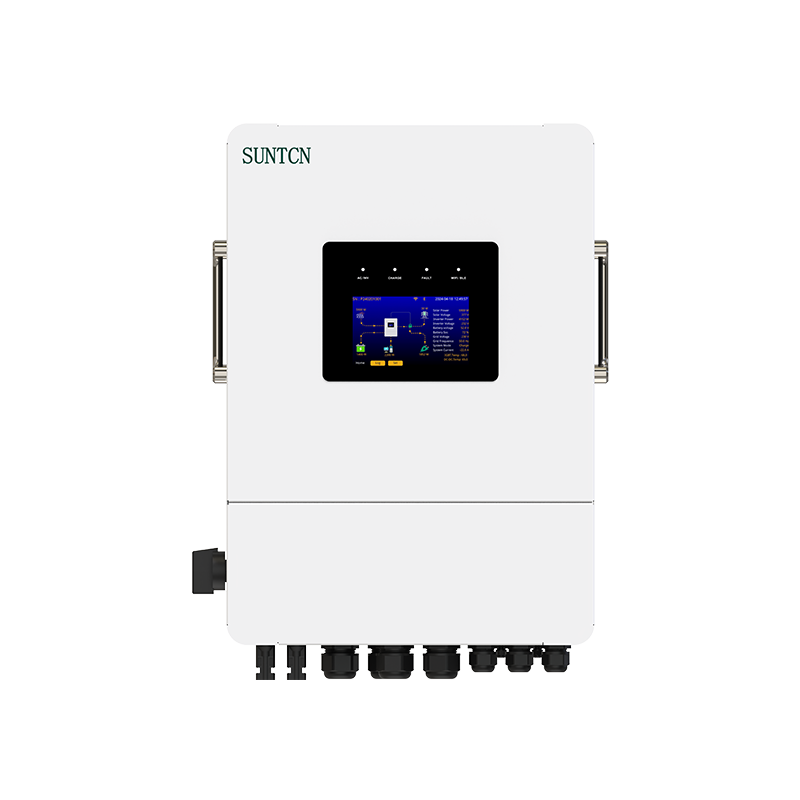
As energy independence becomes a priority for homeowners, businesses, and off-grid installations alike, the all-round hybrid inverter has emerged as the central nervous system of modern energy management. Unlike conventional inverters that serve a single function, a hybrid inverter integrates solar input, battery storage, grid connection, and backup power into one cohesive unit. Understanding what it does, how it works, and what to look for when choosing one can make the difference between a system that merely functions and one that genuinely optimizes your energy use and reduces costs over the long term.
What Makes a Hybrid Inverter Truly "All-Round"
The term "all-round" refers to a hybrid inverter's ability to handle every major energy source and load scenario within a single device. A standard grid-tie inverter only converts DC solar power to AC and feeds it into the grid — it shuts down during a power outage for safety reasons. A standard off-grid inverter works without the grid but cannot export excess power or draw supplemental grid power when solar production is low. An all-round hybrid inverter overcomes both limitations.
It simultaneously manages photovoltaic (PV) input, battery charging and discharging, grid import and export, and critical load backup. Advanced models also integrate with diesel generators, wind turbines, and smart home energy management systems (EMS). This multi-source, multi-mode architecture is what makes it genuinely versatile for residential, commercial, and industrial deployments.
Core Operating Modes and How They Work
One of the defining strengths of an all-round hybrid inverter is its ability to switch between operating modes automatically based on real-time conditions. Each mode serves a specific energy management purpose:
- Self-Consumption Mode: Solar energy powers connected loads directly. Excess generation charges the battery. The grid is used only when both solar and battery are insufficient. This is the common mode for grid-connected residential systems aiming to reduce electricity bills.
- Feed-In Mode: After meeting local loads and fully charging the battery, surplus solar power is exported to the grid, generating revenue or credits under net metering or feed-in tariff schemes.
- Backup / UPS Mode: When grid power fails, the inverter disconnects from the grid (anti-islanding protection) and seamlessly powers critical loads from the battery. Switchover times for premium models are typically under 10–20 milliseconds, imperceptible to appliances.
- Off-Grid Mode: For remote installations with no grid access, the inverter manages all energy flows autonomously, combining solar, battery, and optional generator input to maintain stable AC output.
- Time-of-Use (TOU) Optimization: The inverter charges batteries during low-tariff periods (e.g., overnight) and discharges them during peak-rate hours, savings in markets with dynamic electricity pricing.
Key Technical Specifications That Define Performance
When evaluating an all-round hybrid inverter, the specification sheet reveals far more than marketing language. The following parameters directly determine how well the unit will perform in your specific application:
| Specification | Typical Range | Why It Matters |
| Rated AC Output Power | 3 kW – 30 kW | Must match or exceed peak load requirements |
| Max PV Input Voltage | 450V – 1000V DC | Determines compatible solar array configurations |
| MPPT Trackers | 1 – 4 independent | More MPPTs allow panels on multiple orientations or with partial shading |
| Battery Voltage Range | 48V – 800V | Must be compatible with chosen battery chemistry and configuration |
| Max Battery Charge/Discharge Current | 50A – 200A | Affects how quickly the battery is charged or can supply power |
| Conversion Efficiency | 94% – 98.6% | Higher efficiency means less energy wasted as heat |
| Backup Switchover Time | <10 ms – 20 ms | Critical for sensitive equipment like computers and medical devices |
Battery Compatibility: LiFePO4, Lead-Acid, and High-Voltage Packs
An all-round hybrid inverter is only as effective as its compatibility with the battery system behind it. Different battery chemistries have fundamentally different charge profiles, voltage ranges, and communication requirements, and a well-designed hybrid inverter must accommodate them correctly.
LiFePO4 (Lithium Iron Phosphate)
Currently the popular choice for residential and commercial hybrid systems, LiFePO4 batteries offer a cycle life of 3,000–6,000 cycles, a flat discharge curve, thermal stability, and high charge/discharge efficiency (95–99%). All-round hybrid inverters that support LiFePO4 communicate with the battery's BMS (Battery Management System) via CAN bus or RS485 protocols, enabling intelligent charge management, state-of-charge reporting, and fault protection.
Lead-Acid (AGM / Gel)
While older and less energy-dense, lead-acid batteries remain cost-effective for budget-constrained off-grid systems. Hybrid inverters supporting lead-acid typically use three-stage charging (bulk, absorption, float) and require the user to input battery capacity and type for correct charging parameters. Depth of discharge should be kept above 50% to preserve cycle life.
High-Voltage Battery Packs
Premium all-round hybrid inverters increasingly support high-voltage battery packs operating at 200V–800V DC, which dramatically reduces current levels at a given power output, minimizing cable losses and enabling more compact wiring. Brands like BYD, Pylontech, and Huawei have developed purpose-built high-voltage stacking battery systems designed to pair with compatible hybrid inverters.
Smart Energy Management and Monitoring Capabilities
Modern all-round hybrid inverters go beyond power conversion — they function as intelligent energy management hubs. flagship models include built-in Wi-Fi, Ethernet, or 4G connectivity, allowing real-time monitoring via smartphone apps or web portals. Users can track PV production, battery state of charge, grid import/export, and load consumption down to the minute.
Advanced units support integration with smart home platforms such as Home Assistant, SolarEdge Energy Hub, or proprietary cloud systems. Some inverters support dynamic export control, adjusting grid feed-in automatically to comply with utility regulations. Remote firmware updates, remote diagnostics, and alert notifications for faults or abnormal conditions are now standard expectations for professional-grade hybrid inverters.
For commercial installations, features like demand response management, load scheduling, and integration with energy tariff APIs allow the inverter to make autonomous decisions — for example, curtailing non-essential loads during peak grid demand periods or pre-charging batteries ahead of a forecast cloudy day.
Parallel and Three-Phase Configurations for Scalability
A single all-round hybrid inverter may not be sufficient for larger homes, commercial buildings, or industrial facilities with high power demands. manufacturers offer parallel connectivity, allowing multiple units to be combined to increase total output power. Systems of 3, 6, or even 9 units can be paralleled, delivering tens of kilowatts of combined capacity while sharing battery banks and PV inputs.
Three-phase configurations are essential for industrial equipment, large HVAC systems, and any facility with a three-phase utility connection. Three-phase hybrid inverters (or three single-phase units configured in a three-phase arrangement) balance loads across all phases and meet grid interconnection standards that mandate balanced three-phase output for commercial installations.
Installation Considerations and Safety Standards
Correct installation is non-negotiable for both performance and safety. An all-round hybrid inverter should be installed by a certified electrician familiar with both DC and AC systems. Key installation factors include:
- Location: Install in a cool, ventilated, and dry location away from direct sunlight. inverters are rated IP65 for outdoor installation, but indoor placement in a dedicated electrical room extends operational life and improves thermal performance.
- DC Wiring: Use appropriately rated DC cables with UV-resistant insulation for all PV string connections. Undersized cabling causes resistive losses and is a fire hazard at high DC voltages.
- Protection Devices: Install DC surge protection devices (SPDs), AC circuit breakers, battery fuses, and earth fault protection in accordance with local electrical codes such as IEC 62109, NEC 690 (USA), or AS/NZS 5033 (Australia).
- Grid Compliance: Ensure the inverter carries certifications required in your region — such as VDE-AR-N 4105 (Germany), G98/G99 (UK), UL 1741 (USA), or AS 4777 (Australia) — before connecting to the utility grid.
How to Choose the Right All-Round Hybrid Inverter for Your Needs
Selecting the right unit requires a systematic assessment of your energy profile and future goals. Start by auditing your daily energy consumption and identifying peak load demand. This determines the AC output power required. Next, size your PV array based on available roof space and local solar irradiance data, and verify that the inverter's MPPT input specifications accommodate your planned panel configuration.
Consider your battery expansion plans — choosing an inverter with a wide battery voltage range and support for popular BMS communication protocols gives you more flexibility as battery costs continue to decline. Finally, evaluate the manufacturer's support network, warranty terms (typically 5–10 years), and availability of spare parts and firmware updates. A hybrid inverter is a 10–15 year investment, and long-term vendor reliability matters as much as upfront technical specifications.
An all-round hybrid inverter is not simply a piece of electrical hardware — it is the strategic core of a resilient, efficient, and future-ready energy system. Whether your priority is reducing grid dependency, protecting against outages, solar returns, or building toward full energy independence, choosing the right hybrid inverter with the right feature set is the single impactful decision in your entire energy system design.