 English
 Español
 Deutsch
Content
- 1 What Is a Solar Grid Tie Inverter and What Role Does It Play?
- 2 How a Grid Tie Inverter Converts DC Solar Power to Grid-Compatible AC
- 3 Types of Solar Grid Tie Inverters and Their Best Applications
- 4 Key Specifications to Compare When Selecting a Grid Tie Inverter
- 5 Anti-Islanding Protection and Grid Safety Requirements
- 6 Grid Tie Inverters With Battery Storage Integration
- 7 Installation, Sizing, and Common Configuration Mistakes to Avoid
What Is a Solar Grid Tie Inverter and What Role Does It Play?
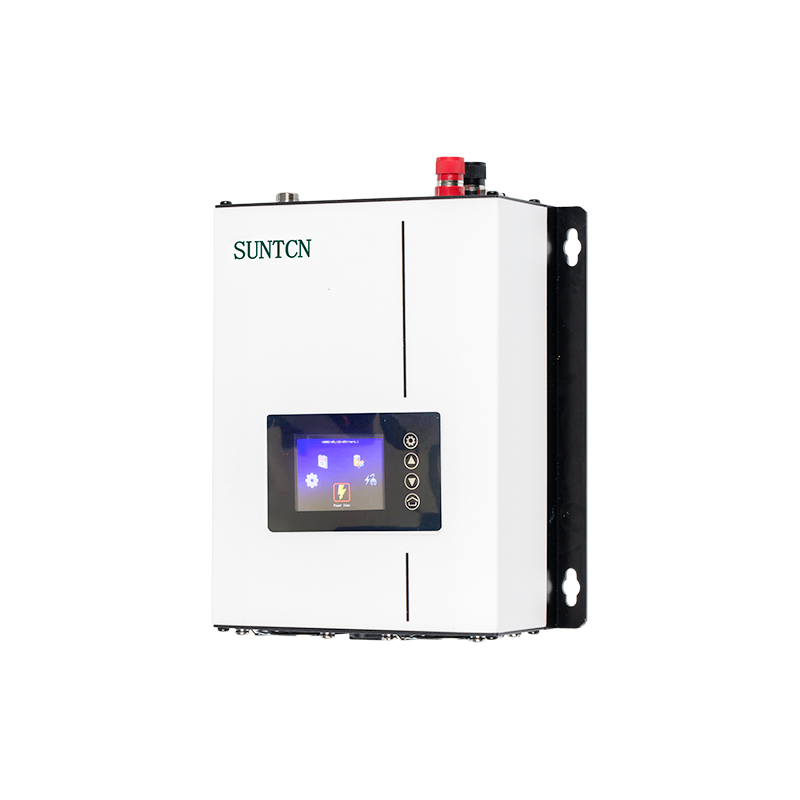
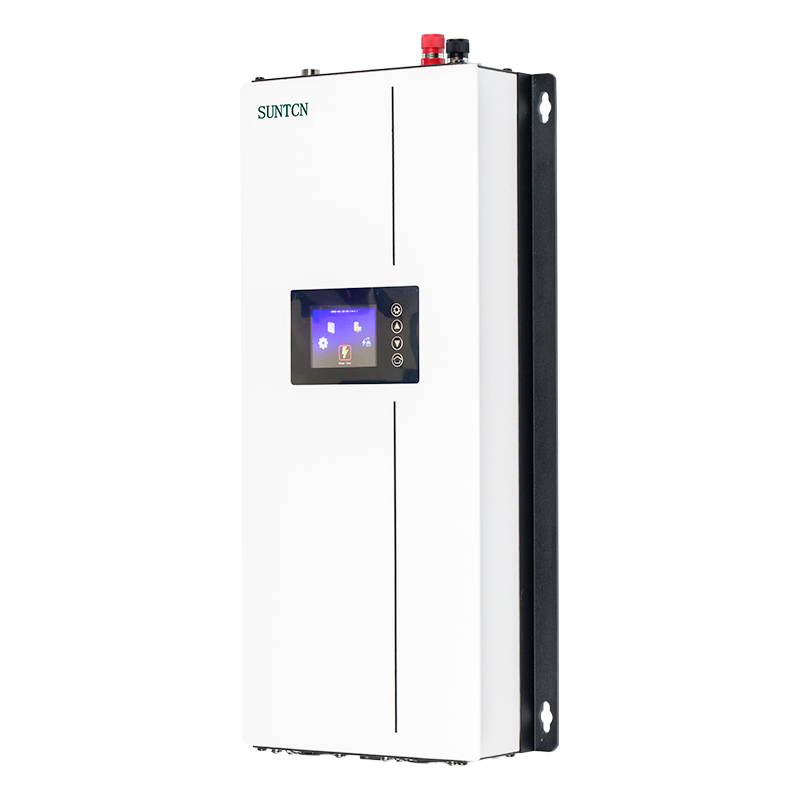
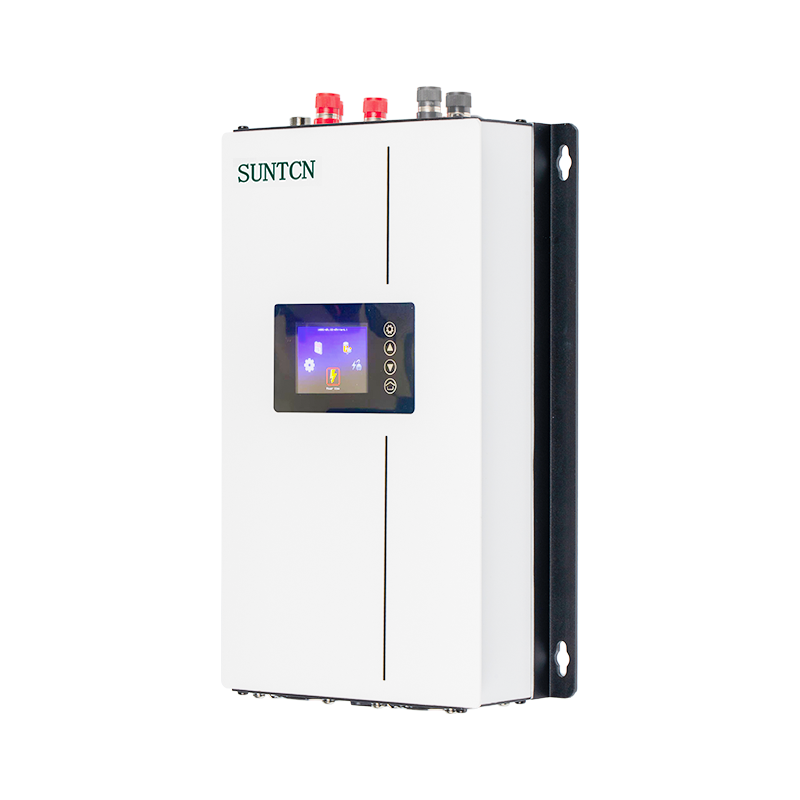
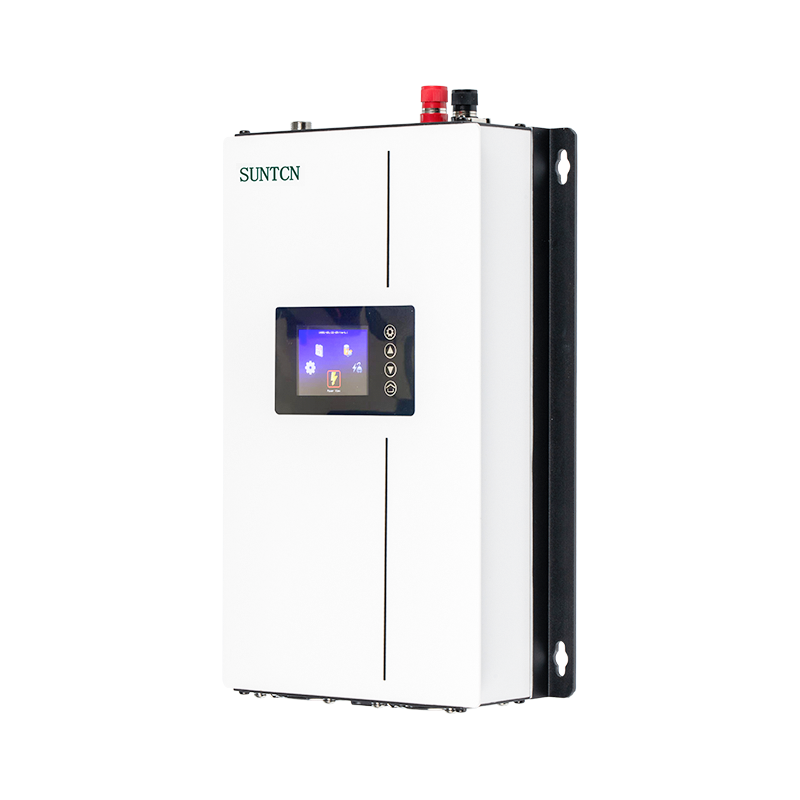
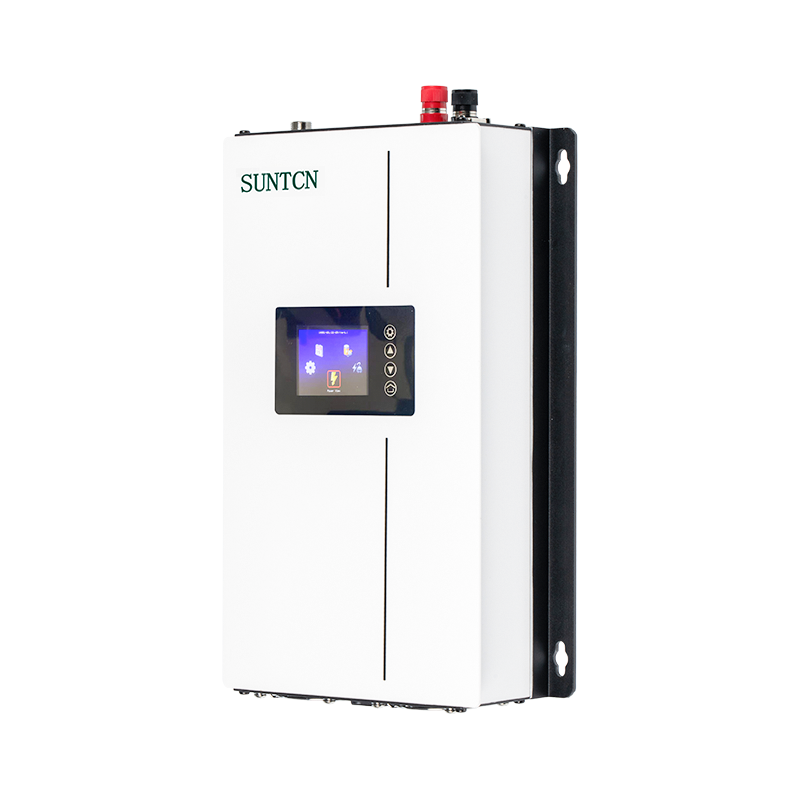
A solar grid tie inverter — also called a grid-connected inverter or grid-interactive inverter — is the core power conversion device in a solar photovoltaic system that connects directly to the public electricity grid. Its fundamental job is to convert the direct current (DC) electricity generated by solar panels into alternating current (AC) electricity that matches the voltage, frequency, and phase of the utility grid, allowing solar-generated power to flow seamlessly into the building's electrical circuits and, when generation exceeds local consumption, back into the grid itself. Unlike off-grid inverters, which must generate their own stable AC reference frequency independently, a grid tie inverter synchronizes its output precisely to the existing grid waveform — a process managed continuously by internal phase-locked loop (PLL) circuits that monitor the grid's live voltage and frequency up to thousands of times per second.
The significance of this device to overall system performance cannot be overstated. The inverter is the single component that determines how efficiently the DC power harvested by the solar array is converted to usable AC power. Even a high-quality solar panel array will underperform if paired with a poorly matched or low-efficiency inverter. Conversion losses in the inverter directly reduce the total energy yield of the system over its operating life — and given that residential and commercial solar systems are designed to operate for 20 to 30 years, even a 1 to 2 percent difference in inverter efficiency compounds into significant lost energy production over the system's lifetime.
How a Grid Tie Inverter Converts DC Solar Power to Grid-Compatible AC
The internal conversion process in a modern solar grid tie inverter involves several stages working in rapid succession. Understanding each stage helps system designers and installers appreciate why inverter quality and specification matter beyond the headline efficiency number printed on the datasheet.
The stage is Power Point Tracking (MPPT), which continuously adjusts the electrical operating point of the solar array to extract the available power under prevailing irradiance and temperature conditions. Solar panels have a non-linear current-voltage (I-V) characteristic with a single peak power point that shifts constantly as sunlight intensity changes, clouds pass, and panel temperature rises or falls. The MPPT algorithm — typically a perturb-and-observe or incremental conductance method — hunts for this peak by making small adjustments to the DC input voltage and measuring the resulting power change, converging on the operating point hundreds of times per second. High-quality grid tie inverters track the MPP with efficiencies exceeding 99.5 percent under dynamic conditions, while poorly designed MPPT systems may lose 3 to 5 percent of available energy through sub tracking.
After MPPT, the DC power passes through a DC-to-AC conversion stage using a bridge of power semiconductor switches — typically insulated gate bipolar transistors (IGBTs) or, in newer high-frequency designs, silicon carbide (SiC) MOSFETs. These switches are controlled by a pulse-width modulation (PWM) signal from the inverter's digital signal processor, switching at high frequency to synthesize a sinusoidal AC output waveform. A low-pass output filter — typically an LCL filter — removes high-frequency switching harmonics from the synthesized waveform, producing a clean sine wave that meets the harmonic distortion limits specified by grid connection standards such as IEEE 1547 in the United States and VDE-AR-N 4105 in Germany. The final AC output is synchronized to the utility grid and injected at the correct phase and voltage amplitude through the connection point.
Types of Solar Grid Tie Inverters and Their Best Applications
Grid tie inverters are available in several distinct topologies, each with different implications for system design, installation complexity, energy yield, and cost. Choosing the wrong topology for a specific roof configuration or shading profile can significantly reduce overall system performance regardless of individual component quality.
String Inverters
String inverters are the widely deployed grid tie inverter type globally, connecting a series string of solar panels — typically 8 to 15 panels — to a single inverter input. The entire string operates at the same MPPT point, which means that if any panel in the string is shaded, soiled, or underperforming, the whole string's output is pulled down to the level of the weakest panel. This "Christmas lights" effect makes string inverters the correct choice only for roof sections with uniform orientation, minimal shading, and consistent panel performance. Their key advantages are low cost, high reliability due to minimal electronics per watt, and straightforward maintenance — a single inverter handles a large array section, reducing the number of active components to monitor. String inverters are available from 1 kW to 250 kW for commercial three-phase applications and dominate the utility-scale segment when used with long panel strings at high DC voltages up to 1,500 V.
Microinverters
Microinverters are small grid tie inverters mounted directly behind each individual solar panel, performing DC-to-AC conversion at the panel level rather than aggregating DC from multiple panels. Because each panel operates with its own independent MPPT, partial shading on one panel has no effect on the output of its neighbors — making microinverters the choice for complex roofs with multiple orientations, significant shading from chimneys, dormer windows, or trees, or mixed panel types. The AC output from each microinverter is combined on the AC side and fed to the grid connection point. The trade-off is higher upfront cost per watt compared to string inverters, and a larger number of active devices distributed across the roof — each of which is a potential failure point requiring attention. Leading microinverter brands including Enphase have addressed reliability concerns through extensive accelerated life testing and long warranty terms of 25 years.
Power Optimizers with String Inverters
DC power optimizers are panel-level devices that perform MPPT individually at each panel — like a microinverter — but output regulated DC rather than AC. The optimized DC from each panel is combined and fed to a conventional string inverter for final conversion to AC. This hybrid approach captures of the energy yield benefit of microinverters in shaded or complex roof situations while retaining the cost and reliability advantages of a central string inverter for the AC conversion stage. SolarEdge is the dominant supplier of power optimizer systems and packages its optimizers with proprietary string inverters designed to accept the fixed-voltage DC bus output from the optimizers. This architecture also enables panel-level monitoring, which provides granular performance data that helps identify underperforming panels or soiling issues in large systems.
Central Inverters
Central inverters are large-scale grid tie inverters used in utility and commercial solar farms, handling power from hundreds of kilowatts to several megawatts per unit. Multiple parallel strings from large sections of the solar array connect to combiner boxes that aggregate DC power before feeding the central inverter. Their high power density, low cost per watt, and ease of grid interface make them the standard choice for ground-mounted utility projects. The main disadvantage is that a single inverter failure takes a large section of the array offline, making reliability and rapid serviceability critical selection criteria at this scale.
Key Specifications to Compare When Selecting a Grid Tie Inverter
The inverter datasheet contains a range of electrical and environmental specifications that determine suitability for a specific solar installation. The table below highlights the important parameters and explains what each means in practical system design terms:
| Specification | What It Means | Typical Range |
| CEC / Euro Efficiency | Weighted average efficiency across realistic load profile | 96% – 99% |
| MPPT Voltage Range | DC input voltage window where MPPT operates correctly | 100V – 800V (residential) |
| Max DC Input Voltage | Absolute string open-circuit voltage — must not be exceeded | 600V, 1000V, or 1500V |
| Number of MPPT Inputs | Independent MPPT channels for differently oriented or shaded strings | 1 – 6 (residential) |
| AC Output Power | Continuous rated AC output power | 1.5 kW – 250 kW |
| THD (Total Harmonic Distortion) | AC output waveform purity — lower is better for grid compatibility | Less than 3% |
| Nighttime Power Consumption | Standby draw from the grid when no solar is available | 1W – 10W |
| Operating Temperature Range | Ambient temperature range for full-power operation | -25°C to +60°C |
Anti-Islanding Protection and Grid Safety Requirements
One of the critical safety requirements for any grid tie inverter is anti-islanding protection — the ability to detect when the utility grid has gone offline and immediately cease power injection into the grid. Without this protection, a solar system could continue energizing a section of grid wiring that utility workers believe is de-energized for repair or emergency response work, creating a severe electrocution hazard. Every grid tie inverter sold for use in grid-connected systems must comply with anti-islanding standards, and utility companies worldwide require this compliance as a condition of granting permission to connect a solar system to the grid.
Anti-islanding detection methods fall into two categories: passive and active. Passive methods monitor the grid voltage and frequency for deviations from normal operating bounds — when the grid goes offline, the local load and solar generation rarely balance perfectly, causing voltage or frequency to shift outside the acceptable window, which triggers the inverter to disconnect. Active methods deliberately introduce small perturbations into the inverter's output — such as a slight frequency drift or reactive power injection — and monitor whether the grid absorbs or reacts to these perturbations, which it would do if the utility is connected but would not if the inverter is islanded. Modern grid tie inverters implement both passive and active detection simultaneously, achieving the detection speed required by IEEE 1547-2018 and equivalent international standards — typically within two seconds of grid loss.
In addition to anti-islanding, grid tie inverters must comply with voltage and frequency ride-through requirements that have become increasingly stringent as solar penetration on distribution networks has grown. Older inverter standards required immediate disconnection when grid voltage or frequency moved outside a narrow band, but this behavior — if triggered simultaneously in thousands of inverters during a grid disturbance — could actually worsen grid stability by removing large amounts of generation at exactly the moment the grid needs support. Current standards require inverters to remain connected and provide reactive power support during low-voltage events and to tolerate frequency deviations within a specified ride-through envelope, contributing to grid stability rather than degrading it.
Grid Tie Inverters With Battery Storage Integration
An increasing proportion of new solar installations combine a grid tie inverter with battery energy storage to capture surplus solar generation for later use rather than exporting it to the grid at low feed-in tariff rates. This combination creates a hybrid system that can optimize self-consumption, provide backup power during grid outages, and participate in demand response or virtual power plant programs that compensate owners for making battery storage capacity available to the grid operator. The integration can be achieved through two different equipment approaches, each with different cost and performance trade-offs.
AC-Coupled Battery Systems
In an AC-coupled configuration, the solar array connects to a standard grid tie inverter as normal, and a separate bidirectional battery inverter handles charging and discharging of the battery bank on the AC bus. This approach allows battery storage to be retrofitted to an existing solar installation without replacing the solar inverter, and provides design flexibility because the battery inverter can be sized independently from the solar inverter. The trade-off is a slightly lower round-trip efficiency because energy passes through two conversion stages — DC to AC in the solar inverter and AC to DC in the battery charger — before being stored, introducing additional losses compared to DC-coupled alternatives.
DC-Coupled Hybrid Inverters
Hybrid grid tie inverters integrate solar MPPT, battery charge/discharge control, and grid AC conversion into a single unit with both a solar DC input and a battery DC port. Surplus solar energy charges the battery directly on the DC bus before reaching the AC conversion stage, avoiding one conversion step and achieving higher round-trip storage efficiency than AC-coupled systems. Leading hybrid inverter platforms from manufacturers including SMA, Fronius, Huawei, and GoodWe support lithium battery integration via CAN bus or RS485 communication, enabling the inverter to manage battery state of charge, temperature protection, and cell balancing in coordination with the battery management system (BMS). This unified approach simplifies installation and monitoring but requires a complete inverter replacement when adding battery storage to an existing solar system that already has a conventional string inverter.
Installation, Sizing, and Common Configuration Mistakes to Avoid
Correct sizing and configuration of a grid tie inverter is as important as the quality of the device itself. Several common specification errors reduce system performance significantly even when high-quality equipment is used:
- Under-sizing the Inverter (DC:AC Ratio Too High): Many installers intentionally oversize the solar array relative to the inverter's AC rating — a practice called clipping — to keep more of the inverter's operating time near its peak efficiency point. A DC:AC ratio of 1.1 to 1.3 is generally acceptable, but ratios above 1.4 cause significant clipping losses on high-irradiance days, wasting potential energy production.
- Exceeding DC Input Voltage: Panel open-circuit voltage increases as temperature falls. String voltage must be calculated at the expected ambient temperature for the installation location — not at standard test conditions — to ensure the cold-weather Voc does not exceed the inverter's DC input voltage, which would permanently damage the inverter's input stage.
- Incorrect MPPT Range Matching: String voltage at power point (Vmp) under high-temperature, low-irradiance conditions must remain within the inverter's MPPT operating range throughout the year. If the operating voltage falls below the MPPT window's lower threshold in summer, the inverter will not track power or may disconnect, losing substantial morning and evening production.
- Inadequate Ventilation: Grid tie inverters derate their output power at elevated internal temperatures to protect components. Installing an inverter in a poorly ventilated enclosure, in direct sunlight, or adjacent to other heat-generating equipment can cause chronic thermal derating that reduces energy yield by 5 to 15 percent during summer peak production hours.
- Mismatched Grid Connection Requirements: Inverters must be certified and configured for the specific grid voltage, frequency, and interconnection standard applicable in the installation jurisdiction. Using an inverter certified for one market in another — or failing to configure the correct grid profile in the inverter's settings — can result in connection refusal by the utility or non-compliant operation that violates the terms of the grid connection agreement.
A solar grid tie inverter is the technological and commercial heart of any grid-connected solar investment. Selecting the right type and specification for the specific roof configuration, shading conditions, utility tariff structure, and future battery storage plans determines how much of the solar array's potential is actually delivered as usable energy over the system's two to three decade operating life. Investing the time to understand inverter technology in depth — rather than defaulting to the upfront cost — consistently produces better long-term returns and fewer operational headaches for residential and commercial solar owners alike.