 English
 Español
 Deutsch
Content
- 1 What a Hybrid Inverter Actually Does
- 2 Core Architecture: How the Power Paths Are Structured
- 3 Power Flow Management: Prioritization Logic Explained
- 4 Battery Compatibility and Sizing for Hybrid Systems
- 5 Generator Integration: Extending Hybrid System Resilience
- 6 Monitoring, Data Logging, and Remote Management
- 7 Meeting Future Energy Demands with a Scalable Hybrid Platform
The global energy landscape is undergoing a fundamental transformation. Rising electricity tariffs, the rapid proliferation of rooftop solar, and the urgent need to reduce grid dependency have pushed hybrid inverter technology from a niche solution to a mainstream requirement for both residential and commercial energy systems. At the center of this shift is the PV and battery energy storage based hybrid inverter — a device that does far more than simply convert DC solar power into usable AC electricity. It actively orchestrates power flow across multiple sources to maximize self-consumption, minimize costs, and ensure continuity of supply.
What a Hybrid Inverter Actually Does
A hybrid inverter is fundamentally a multi-directional power management device. Unlike a standard string inverter that only converts solar DC output to AC for immediate use or grid export, a hybrid inverter simultaneously manages power from photovoltaic panels, a battery energy storage system (BESS), the utility grid, and optionally a backup generator. It decides in real time which source to draw from, whether to charge the battery, and when to export surplus power — all based on configurable priority logic and live consumption data.
This capability is what makes hybrid inverters central to achieving energy parity — the point at which the cost of self-generated and self-stored energy equals or falls below grid import prices. By intelligently shifting loads and avoiding peak-tariff grid imports, a well-configured hybrid inverter system can dramatically reduce electricity bills while also serving as a resilient backup during outages.
Core Architecture: How the Power Paths Are Structured
Understanding the internal architecture of a hybrid inverter helps operators and installers make better configuration and sizing decisions. A PV and battery storage based hybrid inverter typically integrates several key functional blocks into a single unit:
- MPPT Solar Charger: Tracks the power point of the PV array to extract the energy under variable irradiance and temperature conditions. Higher-end models include two or more independent MPPT trackers to handle arrays with different orientations or shading profiles.
- Bidirectional Battery Converter: Charges the battery from solar or grid and discharges it to supply loads. Efficiency at both charge and discharge directions directly impacts system round-trip losses, so inverter efficiency ratings above 97% are preferred for high-cycling applications.
- Grid Interface and Anti-Islanding: Manages synchronization with the utility grid for seamless import/export and includes mandatory anti-islanding protection to prevent back-feeding during grid outages, as required by standards such as IEEE 1547 and VDE-AR-N 4105.
- AC Bypass and Transfer Switch: In off-grid or backup modes, the inverter switches loads from grid to battery/solar supply, typically within 10–20 milliseconds, fast enough to sustain sensitive equipment like medical devices or IT infrastructure.
- Generator Input Port: Many hybrid inverter platforms include a dedicated AC input for a diesel or gas generator, allowing the system to use generator power to charge batteries or supplement load supply when solar and storage are both insufficient.
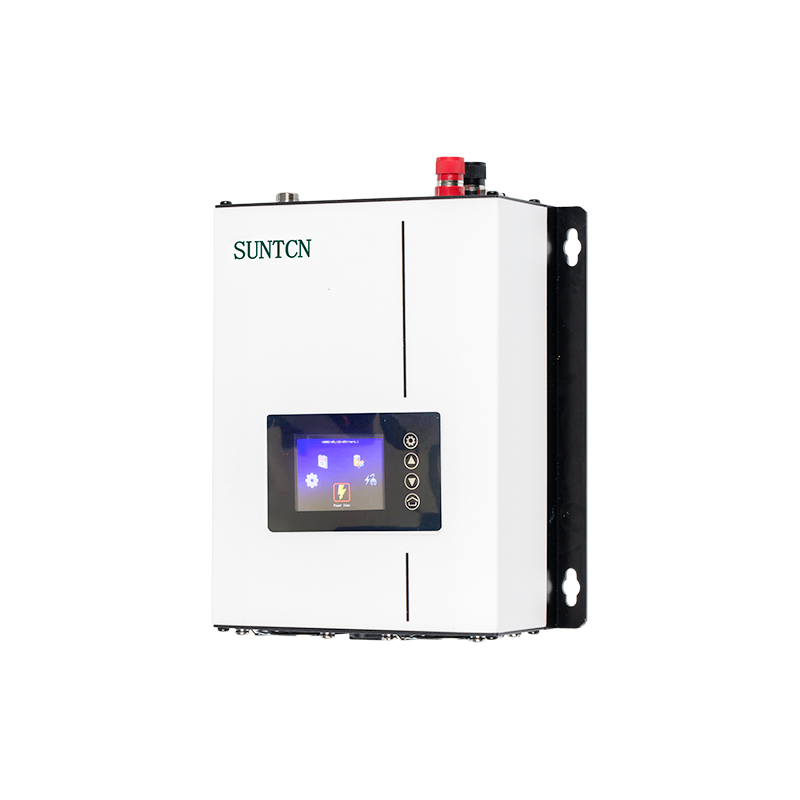
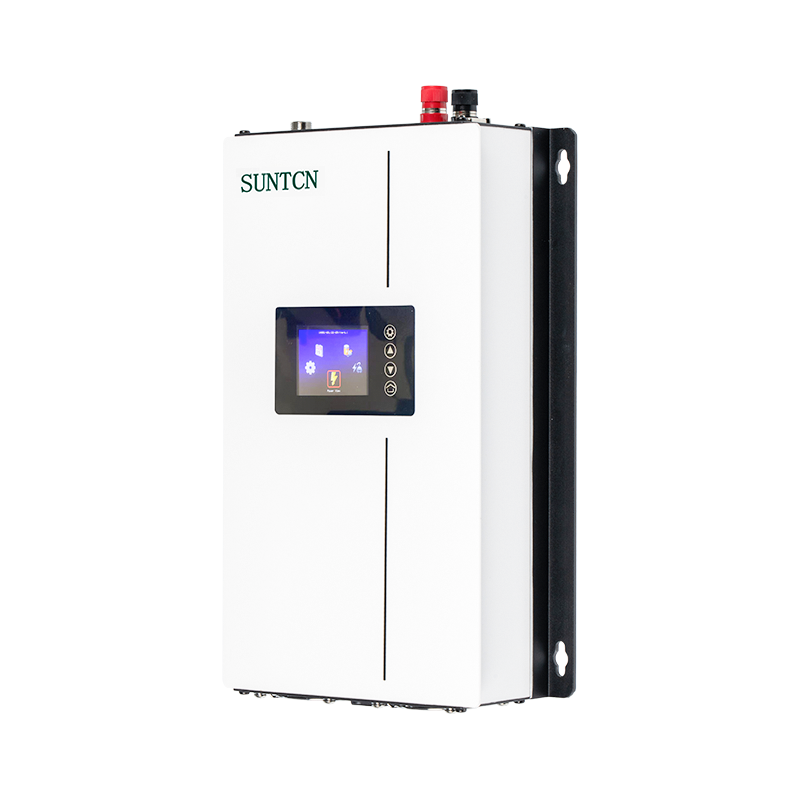
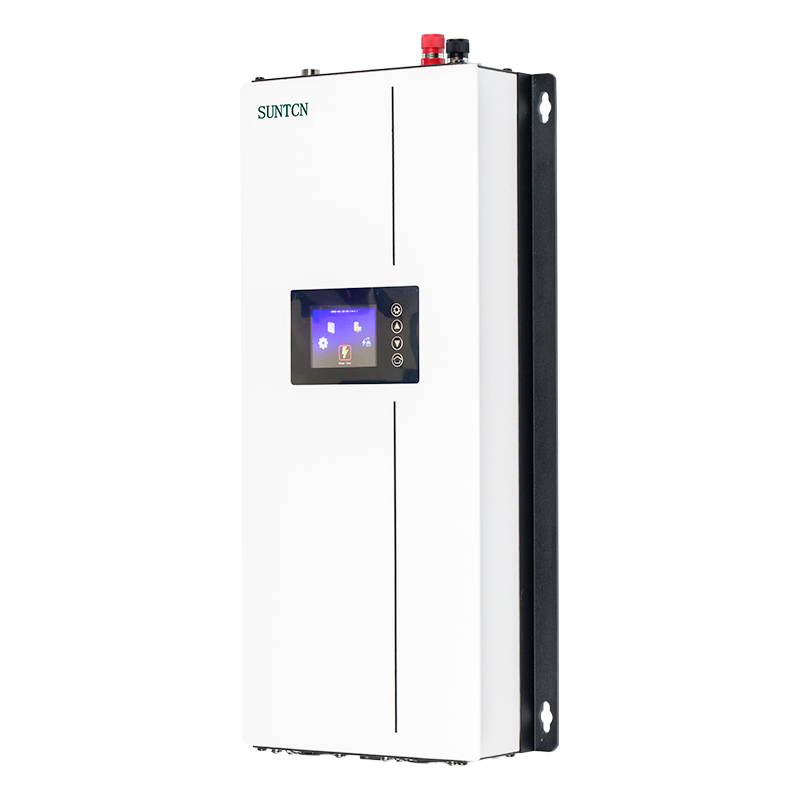
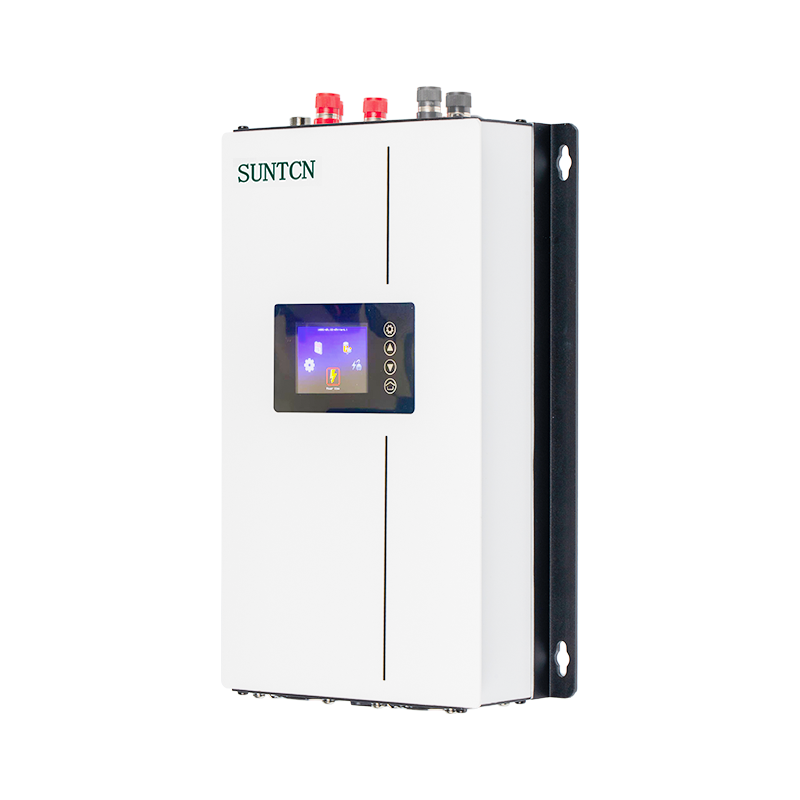
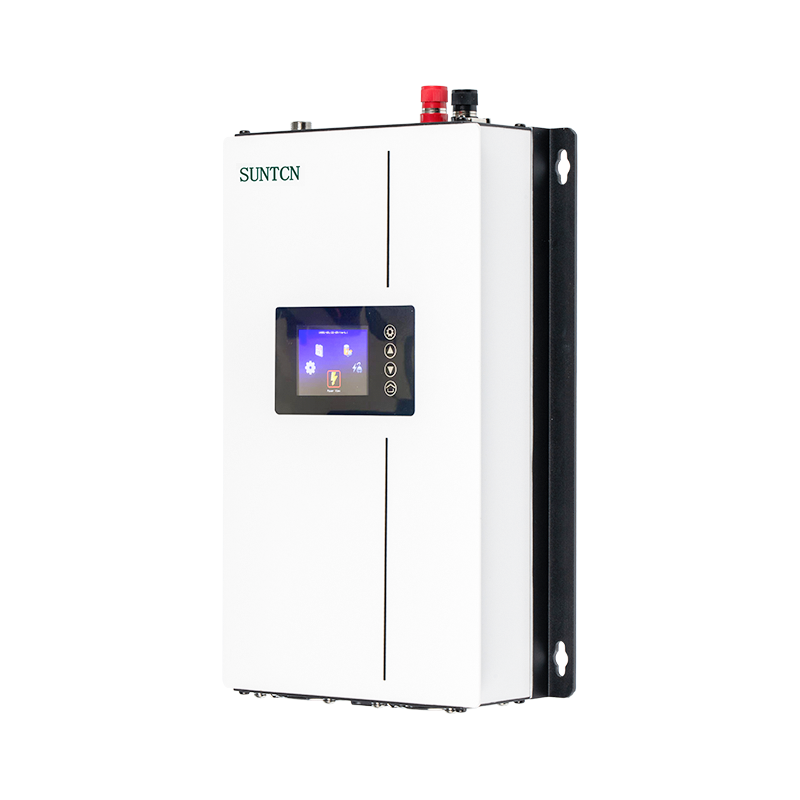
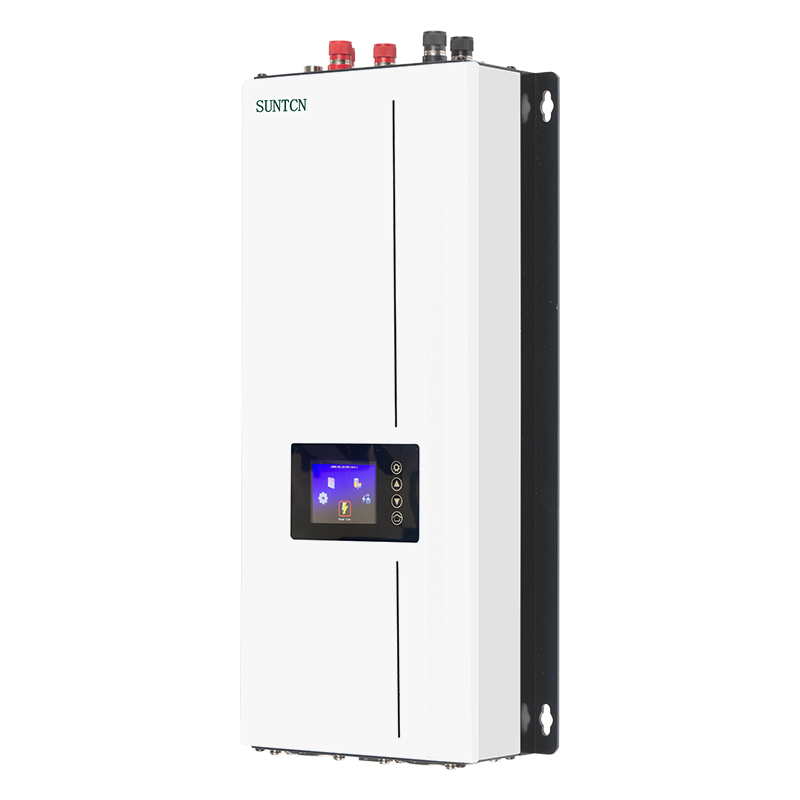
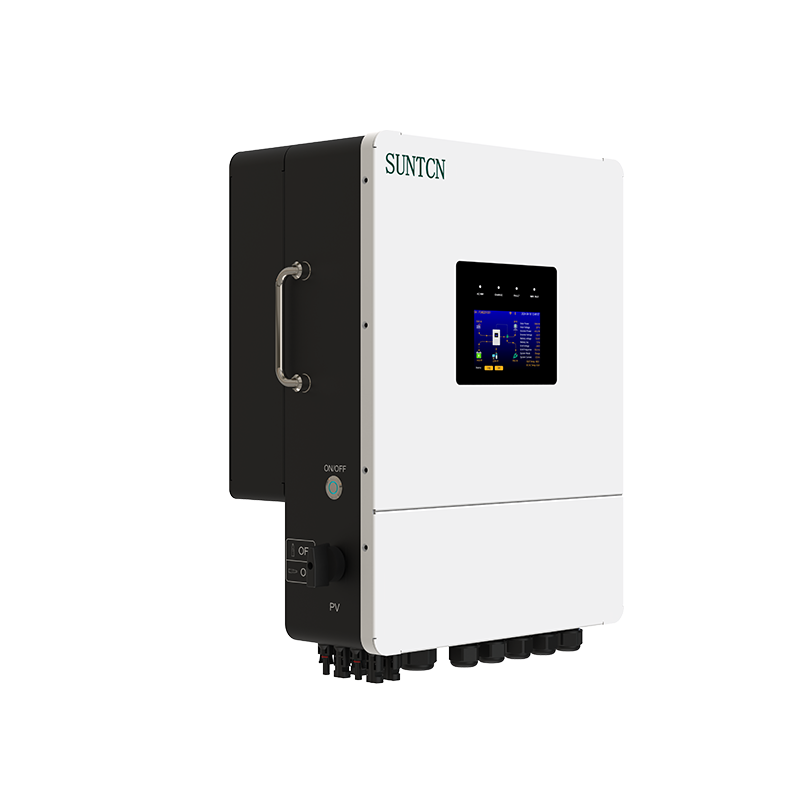
The SUNTCN Hybrid Inverter integrates all of these paths within a compact, high-efficiency chassis, allowing installers to connect PV, batteries, grid, and generators without external coupling devices. This all-in-one architecture reduces installation complexity and component count — a key advantage in both residential retrofits and commercial new builds.
Power Flow Management: Prioritization Logic Explained
The real intelligence of a hybrid inverter lies in its energy management algorithm. platforms offer configurable operating modes that define the order of preference for how power is sourced, stored, and exported. The three common modes are:
Solar Priority Mode
In this mode, all available solar output is used to supply connected loads. Any surplus after loads are met is directed to charge the battery. Once the battery reaches its configured state-of-charge (SoC) ceiling, excess solar is exported to the grid or curtailed depending on local regulations. Grid import is only triggered when solar output and battery discharge together cannot meet demand. This mode is ideal for self-consumption maximization in feed-in tariff (FiT) environments where export prices are low.
Battery Priority Mode
Here the system prioritizes discharging the battery to meet loads before drawing from the grid. Solar still charges the battery during the day, but the dispatch logic is tuned to maximize battery utilization. This mode suits time-of-use (TOU) tariff structures where grid electricity is significantly cheaper during off-peak hours. The battery is charged cheaply overnight and discharged during peak pricing windows, yielding substantial bill reductions.
Grid Priority Mode
In grid priority mode, the inverter primarily draws from the grid to supply loads and only switches to battery or solar when grid power is unavailable or tariffs exceed a set threshold. This mode is used in markets with high feed-in tariff rates where exporting solar is economically more advantageous than self-consumption, or in systems where battery longevity is prioritized over daily cycling.
Battery Compatibility and Sizing for Hybrid Systems
The choice of battery chemistry and capacity has a direct impact on the overall performance of a hybrid inverter system. Lithium iron phosphate (LiFePO4) has become the dominant chemistry for residential and light commercial applications due to its cycle life (typically 3,000–6,000 full cycles), thermal stability, and high depth-of-discharge (DoD) tolerance of up to 90–95%.
When sizing the battery bank, the key variables to balance are:
- Daily load profile: Calculate the average daily energy consumption (kWh) and identify the peak demand periods that need to be offset from the grid.
- Autonomy requirement: For backup-critical applications, size the battery to supply essential loads for a of 8–12 hours without solar input.
- Inverter continuous discharge rate: Ensure the battery's continuous discharge current (C-rate) is compatible with the inverter's AC output power to avoid bottlenecking during high-load events.
- Expandability: Select a hybrid inverter that supports battery capacity expansion via parallel battery modules, allowing the system to grow as energy needs increase over time.
| Battery Chemistry | Cycle Life | Max DoD | Typical Use Case |
|---|---|---|---|
| LiFePO4 | 3,000–6,000 | 90–95% | Residential, C&I, off-grid |
| NMC (Li-NMC) | 1,500–3,000 | 80–90% | Space-constrained installations |
| Lead-Acid (AGM) | 300–700 | 50% | Low-cost / legacy retrofit |
Generator Integration: Extending Hybrid System Resilience
For sites with frequent grid outages or high off-grid autonomy requirements, integrating a generator with the hybrid inverter creates a robust multi-source backup architecture. The hybrid inverter acts as the master controller, automatically starting the generator when battery SoC drops below a defined threshold and shutting it off once the battery is sufficiently recharged — typically to 80% to protect cycle life.
A key configuration parameter is the generator charge current limit, which prevents overloading a generator by restricting how much of its output the inverter uses for battery charging versus load supply. For example, a 5 kVA generator running at 80% capacity (4 kW) might allocate 2.5 kW to loads and 1.5 kW to battery charging, ensuring the generator operates at a comfortable and efficient load factor. Proper generator sizing should account for both the combined load and charging demand the hybrid inverter may simultaneously present.
Monitoring, Data Logging, and Remote Management
A hybrid inverter without comprehensive monitoring is an opportunity missed. Real-time and historical data on solar yield, battery state of charge, load consumption, grid import/export, and system efficiency are essential for validating system performance against design targets and for proactive fault detection.
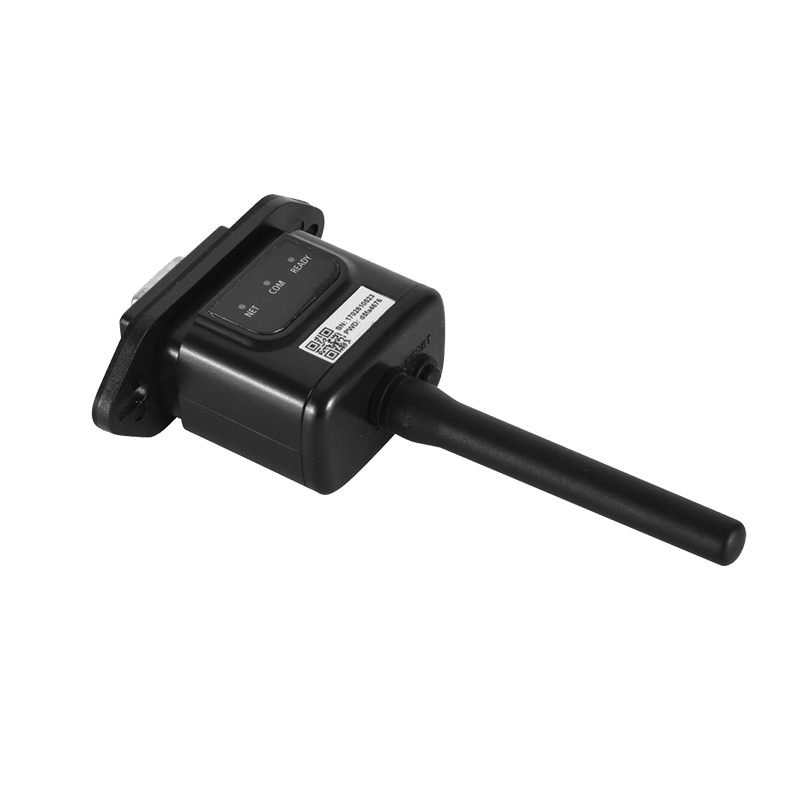
Leading hybrid inverter platforms — including those in the SUNTCN product range — provide cloud-connected monitoring via Wi-Fi or RS485 Modbus communication to a local data logger, with data accessible through a web portal or mobile application. Key metrics to monitor on a daily basis include:
- Self-consumption ratio: The percentage of solar generation directly consumed on-site (target: above 70% in well-optimized residential systems).
- Self-sufficiency ratio: The percentage of total load demand met by solar and battery without grid import (target: 60–80% in mid-latitude climates with adequate battery sizing).
- Battery cycle count and SoH: State-of-health tracking allows proactive battery replacement planning before capacity degradation becomes service-affecting.
- Inverter efficiency curve: Cross-reference actual output efficiency against rated CEC or EU efficiency to identify anomalies that may indicate a hardware issue.
Meeting Future Energy Demands with a Scalable Hybrid Platform
One of the compelling arguments for deploying a hybrid inverter today is future-proofing. Energy demand at residential and commercial sites is increasing, driven by EV charging, heat pumps replacing gas heating, and the electrification of industrial processes. A hybrid inverter system with expandable battery storage, multi-MPPT PV input, and generator compatibility can absorb these new loads incrementally without requiring wholesale infrastructure replacement.
Grid operators are also increasingly offering demand response and virtual power plant (VPP) programs that reward flexible load management. Hybrid inverter platforms with open API or certified VPP integration capability allow site owners to participate in these programs, generating revenue from their stored energy while providing grid stability services. As feed-in tariff policies evolve globally, this ability to shift from a passive exporter to an active grid participant will be a significant differentiator for systems deployed today.
The combination of a well-designed PV array, a properly sized battery bank, and an intelligent hybrid inverter represents the practical and economically viable path to energy independence for the majority of end-users. Selecting a platform with proven multi-source management, high round-trip efficiency, and strong remote monitoring capabilities ensures that the system continues to deliver value well beyond its initial payback period.