 English
 Español
 Deutsch
Content
- 1 What Is a Hybrid Inverter and Why Does Cost-Effectiveness Matter?
- 2 How Hybrid Inverters Generate Real Savings
- 3 Key Specifications That Define Value in Hybrid Inverters
- 4 Battery Compatibility and Its Impact on System Cost
- 5 Features That Maximize Value Without Raising Costs
- 6 Common Mistakes That Undermine Cost-Effectiveness
- 7 How to Calculate Real Return on Investment
What Is a Hybrid Inverter and Why Does Cost-Effectiveness Matter?
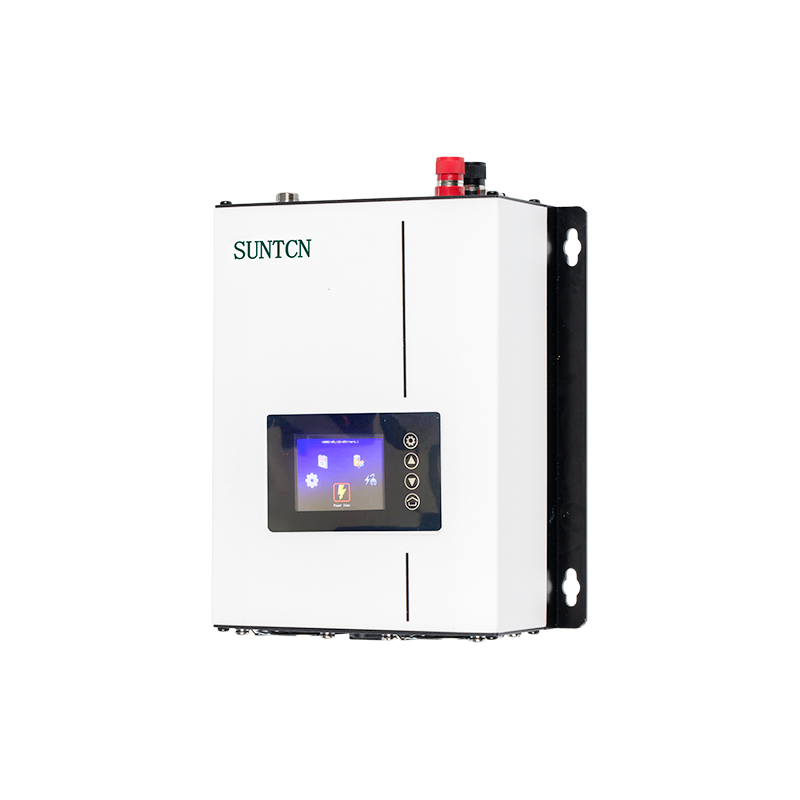
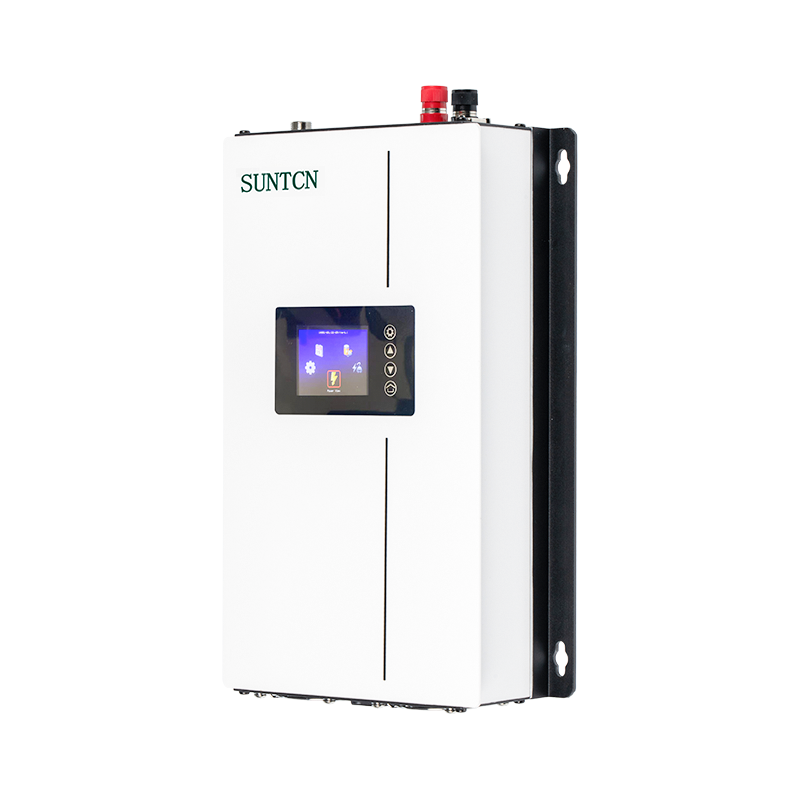
A hybrid inverter is a solar energy management device that combines the functions of a standard solar inverter, a battery charge controller, and a grid-tie inverter into a single integrated unit. Unlike a basic string inverter that only converts DC solar power to AC for immediate household use or grid export, a hybrid inverter manages energy flows between the solar array, battery storage system, utility grid, and home loads simultaneously — prioritizing self-consumption, charging batteries with surplus solar energy, drawing from batteries during grid outages or peak tariff periods, and importing from the grid only when both solar and battery sources are insufficient.
Cost-effectiveness in a hybrid inverter context goes far beyond the purchase price displayed on a product listing. A truly cost-effective hybrid inverter delivers the total cost of ownership over its operating lifetime — typically 10 to 15 years — by combining competitive upfront pricing with high conversion efficiency, low failure rates, comprehensive warranty coverage, compatibility with affordable battery technologies, and meaningful energy savings that accelerate return on investment. An inverter that appears cheap at the point of sale but requires frequent servicing, carries a short warranty, or operates at efficiency levels significantly below premium competitors will cost substantially more over its lifetime than a moderately priced unit with build quality and efficiency ratings.
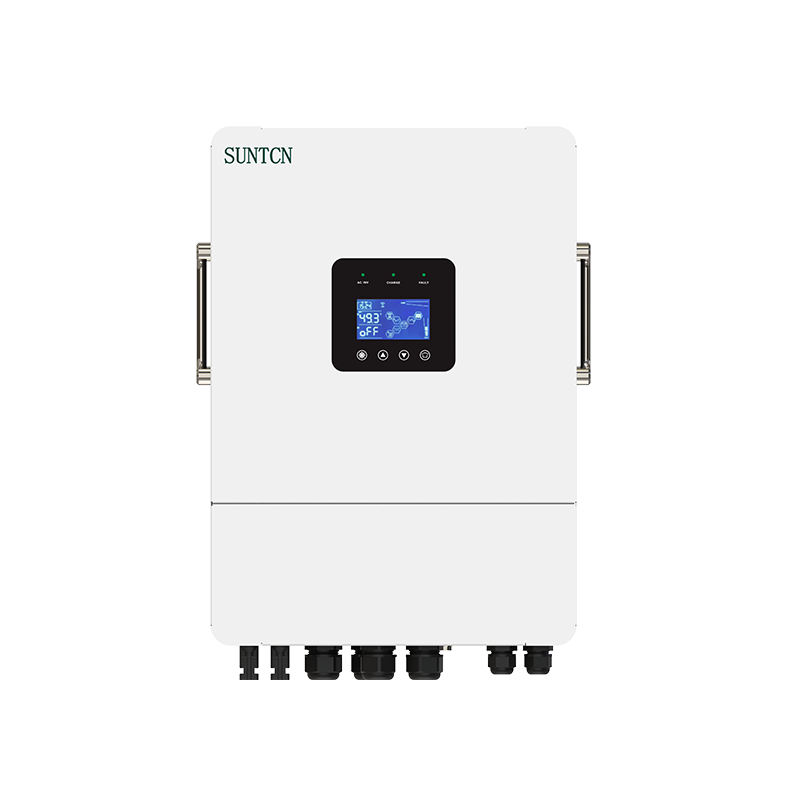
How Hybrid Inverters Generate Real Savings
Understanding the specific mechanisms through which a hybrid inverter reduces energy costs helps clarify which specifications have the greatest financial impact and deserve the attention during the selection process. The savings generated by a hybrid inverter system come from several distinct sources that compound over time.
Self-Consumption Optimization
The primary financial benefit of a hybrid inverter over a standard grid-tie inverter is its ability to store surplus daytime solar generation in batteries for use during evening and nighttime hours when solar production is zero. Without battery storage, excess solar energy is exported to the grid — often at feed-in tariff rates significantly lower than the retail electricity price the household pays for imports. By storing and self-consuming surplus solar energy rather than exporting it, a hybrid inverter system can raise a household's solar self-consumption rate from a typical 30–40% (for a grid-tie-only system) to 70–90%, dramatically reducing grid electricity purchases and accelerating payback.
Peak Tariff Avoidance
In electricity markets with time-of-use (TOU) tariff structures, grid electricity is significantly more expensive during peak demand periods — typically evening hours from 4 PM to 9 PM when household consumption is and solar generation has ceased. A hybrid inverter programmed with TOU-aware charge and discharge scheduling discharges stored battery energy during these high-tariff peak periods, avoiding the expensive grid imports entirely. This peak shaving capability can reduce electricity bills by 20–40% in markets with pronounced TOU rate differentials, even in households with relatively modest solar array sizes.
Backup Power Value
For households in regions with unreliable grid supply, the backup power capability of a hybrid inverter provides financial value beyond bill reduction — it eliminates the cost of alternative backup solutions such as diesel generators, whose fuel, maintenance, and capital costs can be substantial. Hybrid inverters with seamless switchover capability (transition to island mode in under 20 milliseconds) protect sensitive electronics from grid interruptions and maintain critical loads — refrigeration, lighting, communications — without the noise, emissions, or fuel costs of generator backup.
Key Specifications That Define Value in Hybrid Inverters
Evaluating hybrid inverters on cost-effectiveness requires comparing a specific set of technical and commercial specifications that directly determine energy performance, system compatibility, and long-term reliability. The following parameters deserve the careful scrutiny.
| Specification | Budget Range | Mid-Range Value | Premium Tier |
| Peak Efficiency | 93–95% | 96–97% | 97.5–98.6% |
| MPPT Trackers | 1 | 2 | 2–4 |
| Battery Compatibility | Lead-acid only | Lead-acid + LiFePO4 | Multi-chemistry + BMS comms |
| Warranty | 2–3 years | 5 years | 10 years |
| Monitoring | Basic LCD display | App + web portal | Advanced analytics + API |
| Grid Export Control | Fixed/none | Adjustable limit | Dynamic + zero-export option |
The efficiency gap between budget and mid-range inverters has a direct and quantifiable impact on annual energy yield. A 5 kW solar system running through a 94% efficient inverter versus a 97% efficient inverter loses an additional 3% of total solar generation annually — approximately 150–200 kWh per year for a typical residential system in a moderate solar resource location. Over a 10-year system life, this efficiency difference accumulates to 1,500–2,000 kWh of lost generation, which at a retail electricity price of $0.25/kWh represents $375–$500 in additional electricity cost that partially offsets the upfront savings from choosing the cheaper unit.
Battery Compatibility and Its Impact on System Cost
The battery technology supported by a hybrid inverter is one of the financially significant compatibility decisions in the entire system design, because battery costs typically represent 40–60% of a complete hybrid solar storage system installation. An inverter that restricts battery options to a single proprietary brand or chemistry exposes the system owner to premium pricing and limits future upgrade flexibility as battery technology continues to evolve and costs decline.
LiFePO4 Compatibility as a Value Driver
Lithium Iron Phosphate (LiFePO4) batteries have become the dominant storage technology in residential and small commercial hybrid solar systems due to their combination of long cycle life (3,000–6,000 cycles to 80% depth of discharge), high safety profile, declining cost, and broad availability from multiple manufacturers. A hybrid inverter with open-protocol LiFePO4 compatibility — ideally supporting CAN bus or RS485 BMS communication with batteries from multiple manufacturers — gives system owners the ability to source battery storage competitively from the growing number of LiFePO4 suppliers, rather than being locked into a proprietary battery ecosystem with single-source pricing.
Lead-Acid as a Low-Cost Entry Option
For cost-sensitive installations where minimizing upfront capital expenditure is the primary constraint, hybrid inverters compatible with sealed lead-acid (VRLA) or flooded lead-acid batteries offer the entry cost into hybrid solar storage. Lead-acid batteries remain significantly cheaper per kWh of capacity than LiFePO4 at the point of purchase, though their shorter cycle life (300–500 cycles), lower usable depth of discharge (typically 50%), and higher maintenance requirements result in a higher lifetime cost per kWh of energy stored. The choice depends on whether the installation prioritizes minimizing initial investment or minimizing 10-year total cost of storage.
Features That Maximize Value Without Raising Costs
The cost-effective hybrid inverters in the mid-range market segment deliver a set of features that materially improve system performance and owner experience without commanding the price premium of top-tier brands. Identifying which features deliver genuine value versus which are marketing additions with minimal practical impact helps focus purchasing decisions on specifications that actually matter.
- Dual MPPT inputs: Two independent Maximum Power Point Trackers allow solar panels on different roof orientations or with different shading profiles to be connected on separate strings, each optimized independently. This eliminates the energy loss that occurs when mismatched panels are forced onto a single MPPT, improving real-world energy harvest by 5–15% in systems where roof geometry prevents a single-orientation array.
- Wide battery voltage range: Inverters that accept a broad DC battery voltage range — such as 48V to 400V or configurable low/high voltage inputs — provide flexibility to pair with different battery pack configurations and support future battery capacity expansion without requiring inverter replacement.
- Parallel operation capability: The ability to connect multiple identical inverter units in parallel to increase total system power output enables a cost-effective incremental scaling strategy — starting with a single unit sized for current needs and adding units as energy consumption or EV charging loads grow, rather than purchasing an oversized inverter upfront.
- Zero-export / grid export limiting: Many utility interconnection agreements and grid regulations require hybrid inverter systems to limit or eliminate power export to the grid. Inverters with built-in CT clamp energy monitoring and configurable export limit settings comply with these requirements without needing external power control devices, reducing installation cost and complexity.
- Remote firmware update capability: Over-the-air firmware updates via the manufacturer's monitoring platform extend the functional life of the inverter by delivering bug fixes, efficiency improvements, new battery compatibility profiles, and grid code compliance updates without requiring a service call — a feature with meaningful long-term cost implications in markets where grid codes evolve regularly.
- Generator input compatibility: An AC generator input port with automatic start/stop control allows the hybrid inverter to coordinate backup generator operation with battery state of charge, running the generator only when battery reserves are critically low and solar generation is unavailable — minimizing generator runtime and fuel consumption while maintaining supply continuity.
Common Mistakes That Undermine Cost-Effectiveness
Even buyers who research hybrid inverter specifications carefully make predictable purchasing errors that significantly reduce the cost-effectiveness of their final system. Awareness of these common mistakes helps avoid expensive corrections after installation.
- Undersizing the inverter for future loads: Purchasing a hybrid inverter sized precisely for current consumption without headroom for future load growth — EV charging, heat pump installation, home office expansion — often necessitates inverter replacement within 3–5 years. Selecting a unit one power rating tier above current requirements typically adds 10–20% to the inverter cost while potentially eliminating an expensive future replacement.
- Prioritizing brand familiarity over specification value: Premium-branded inverters from established European or Australian manufacturers command 30–60% price premiums over functionally equivalent products from newer manufacturers whose hardware often originates from the same ODM supply chains. Verifying certifications (IEC 62109, UL 1741, VDE, G99), efficiency curves, and warranty terms independently — rather than relying on brand reputation alone — frequently reveals mid-range products that match premium specifications at substantially lower prices.
- Ignoring standby power consumption: A hybrid inverter that consumes 15–25W continuously in standby mode — common in lower-quality units — adds 130–220 kWh to annual household electricity consumption. At $0.25/kWh, this represents $33–$55 per year in additional electricity cost that directly offsets the system's bill reduction performance and extends payback period by months.
- Selecting a proprietary battery ecosystem without comparing lifecycle costs: Inverters that only work with the manufacturer's own branded battery system may appear cost-competitive at initial purchase but lock the owner into that vendor's battery pricing for all future capacity expansions and eventual battery replacement. Calculating the projected 10-year total battery cost — including the likely replacement cycle — across open-protocol versus proprietary options frequently reverses the apparent cost advantage of closed-ecosystem systems.
How to Calculate Real Return on Investment
A rigorous return on investment calculation for a hybrid inverter system requires combining system cost, annual savings, degradation factors, and financing costs into a net present value analysis rather than relying on simple payback period estimates that ignore the time value of money. The following inputs are required for a meaningful ROI calculation specific to a given installation.
- Total installed system cost: Include inverter, battery, solar panels, mounting hardware, cabling, protection devices, installation labor, grid connection fees, and any required electrical panel upgrades — not just the inverter and battery equipment cost.
- Annual bill reduction: Model the actual bill reduction based on the household's consumption profile, local solar irradiance data, inverter efficiency, battery round-trip efficiency (typically 90–95% for LiFePO4), and current electricity tariff structure including any TOU rates and feed-in tariff levels.
- Annual solar panel degradation: Apply the manufacturer's stated panel degradation rate — typically 0.5% per year for modern panels — to reduce the modeled annual generation and savings in each successive year of the analysis period.
- Electricity price escalation: Apply a conservative annual electricity price increase assumption — 3–5% per year is historically defensible in markets — which progressively increases the annual savings generated by the system in nominal terms and materially improves long-term ROI compared to a flat electricity price assumption.
- Available incentives and rebates: Subtract applicable government rebates, tax credits, or utility incentives from the gross system cost to arrive at the net installed cost that forms the basis of the ROI calculation. In many markets, incentives reduce effective system costs by 20–40%, reducing payback periods proportionally.