 English
 Español
 Deutsch
Content
- 1 What a Wind Turbine Grid Tie Inverter Actually Does
- 2 How Wind Turbine Output Differs from Solar — and Why It Matters
- 3 Types of Wind Turbine Grid Tie Inverters
- 4 Power Point Tracking for Wind Applications
- 5 Key Specifications to Compare When Selecting an Inverter
- 6 Grid Code Compliance and Interconnection Requirements
- 7 Installation Considerations and Common Mistakes
- 8 Monitoring, Maintenance, and Lifespan Expectations
What a Wind Turbine Grid Tie Inverter Actually Does
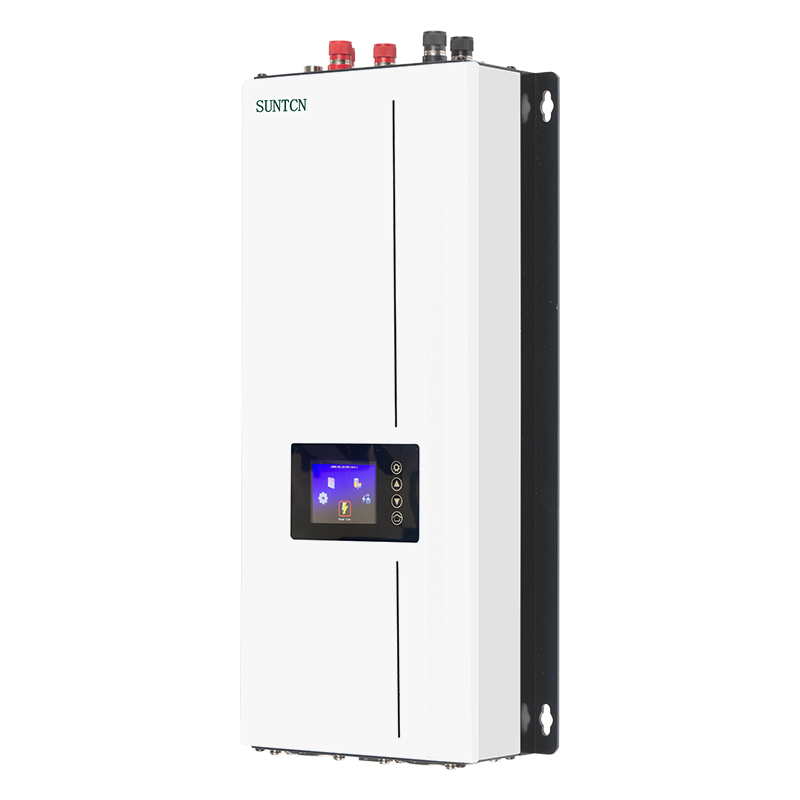
A wind turbine grid tie inverter is the power electronics device that sits between your wind turbine's generator output and the utility grid. Its core job is to take the raw, variable electrical output from a wind turbine — which arrives as either variable-frequency AC or unregulated DC depending on the turbine type — and convert it into grid-synchronized AC power at the correct voltage, frequency, and phase. Without this conversion, the electricity generated by a wind turbine cannot be fed into a standard utility grid or used to power conventional appliances and equipment.
Beyond simple conversion, a grid tie inverter actively synchronizes with the utility grid in real time. It continuously monitors grid voltage and frequency — typically 50 Hz or 60 Hz depending on region — and adjusts its output to match precisely. This synchronization is mandatory for safe grid interconnection. Any mismatch between the inverter output and the grid can cause equipment damage, tripped protection relays, or dangerous back-feed conditions for utility workers. A well-designed wind turbine grid tie inverter handles all of this automatically while also energy harvest and protecting the system from fault conditions.
How Wind Turbine Output Differs from Solar — and Why It Matters
Many system designers assume that a standard solar grid tie inverter can simply be repurposed for wind applications. This is a critical misunderstanding. Solar panels produce DC output that varies relatively slowly with light intensity, while wind turbines — particularly permanent magnet alternator (PMA) types common in small and medium installations — produce three-phase AC output whose voltage and frequency vary continuously and rapidly with wind speed. A 400W turbine spinning in a 5 m/s breeze might produce 30V at 15 Hz, while the same turbine in a 12 m/s gust produces 90V at 45 Hz.
A wind turbine grid tie inverter must rectify this wild variable-frequency AC into DC, then regulate and convert that DC into stable grid-synchronized AC. This two-stage conversion — plus the need to handle rapid input fluctuations without tripping offline — is why wind-specific inverters are a distinct product category with different internal architectures, protection schemes, and power point tracking (MPPT) algorithms compared to solar inverters. Using an incompatible inverter risks both poor energy capture and premature equipment failure from overvoltage or resonance conditions unique to wind generator behavior.
Types of Wind Turbine Grid Tie Inverters
The inverter topology suited to a wind installation depends on turbine size, generator type, grid connection requirements, and whether battery storage is involved. The main categories each offer distinct performance and cost tradeoffs.
String Inverters for Small Wind Systems
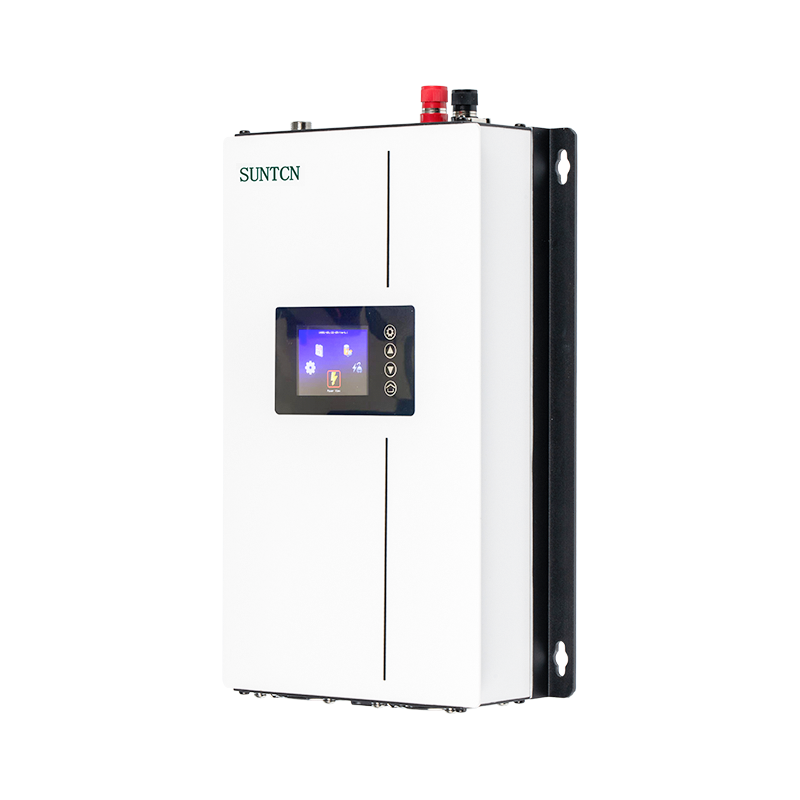
For residential and small commercial wind turbines in the range of 400W to 10kW, single-string grid tie inverters are the common solution. These compact units accept the rectified DC output from the turbine, perform MPPT to extract power, and feed regulated AC into the grid. They are straightforward to install, relatively affordable, and available from numerous manufacturers. Their limitation is that the entire system output passes through a single conversion path, meaning any fault or degraded performance in the inverter affects the complete wind energy contribution.
Three-Phase Inverters for Medium and Large Turbines
Medium and large wind turbines — from 10kW into the megawatt range — typically connect to three-phase grid supplies. Three-phase grid tie inverters handle higher power levels more efficiently by distributing the electrical load across all three phases, reducing per-phase current and minimizing harmonic distortion. In utility-scale wind farms, each turbine is paired with a dedicated three-phase inverter integrated into the turbine nacelle or tower base, with grid connection managed through a dedicated transformer and protection switchgear at the point of common coupling.
Hybrid Inverters with Battery Integration
Hybrid wind grid tie inverters combine grid feed-in capability with battery charge management, allowing excess wind energy to be stored rather than curtailed when the grid cannot accept it or when feed-in tariffs make storage economically attractive. These systems can also provide backup power during grid outages — a significant advantage over pure grid-tie inverters, which must shut down during grid failure for safety reasons. Hybrid inverters are increasingly popular in off-grid capable installations and microgrids where energy independence is a priority alongside grid connectivity.
Dumped-Load Protected Inverters
Wind turbines cannot simply be switched off under overspeed or fault conditions the way solar panels can be disconnected. A turbine that loses its electrical load while spinning at high speed will overspeed dangerously. Wind-specific grid tie inverters incorporate integrated dump load controllers — resistive brake banks that absorb turbine output if the grid connection is lost or the inverter trips — keeping the turbine under controlled load at all times. This dump load function is a mandatory safety feature that has no equivalent in solar inverter designs.
Power Point Tracking for Wind Applications
power point tracking is the algorithm that continuously adjusts the electrical loading on the turbine to extract the available power at any given wind speed. For wind turbines, MPPT must account for the fact that the power available from a turbine follows a cubic relationship with wind speed — doubling the wind speed increases available power by a factor of eight. The tip-speed ratio (TSR) of the rotor also varies with wind speed, meaning the ideal generator loading changes continuously.
Wind MPPT algorithms typically use perturb-and-observe (P&O) methods or model-based approaches that reference turbine power curves to determine operating points. High-quality wind grid tie inverters update their MPPT calculations dozens of times per second, enabling rapid response to wind gusts and lulls. The difference between a well-implemented wind MPPT algorithm and a poorly tuned one can represent 10–20% variance in annual energy yield from the same turbine — a substantial economic impact over the 20-year lifespan of a wind installation.
Key Specifications to Compare When Selecting an Inverter
Matching inverter specifications precisely to your wind turbine and grid connection requirements is essential for safe operation and energy harvest. The following parameters should be evaluated systematically for any candidate inverter.
| Specification | Typical Range | Why It Matters |
| DC Input Voltage Range | 24–600V DC | Must cover full turbine output voltage across wind speeds |
| Input Power | 400W–10kW+ | Must match or exceed turbine rated output |
| MPPT Efficiency | ≥99% | Directly affects annual energy yield |
| Peak Conversion Efficiency | 93–98% | Higher efficiency reduces heat and energy losses |
| Grid Output Voltage | 120/230/400V AC | Must match local utility grid standard |
| Grid Frequency | 50 Hz or 60 Hz | Region-specific; some inverters support both |
| Total Harmonic Distortion | <3% | Grid code compliance and power quality |
| Anti-Islanding Protection | Mandatory | Safety shutdown when grid goes offline |
Grid Code Compliance and Interconnection Requirements
Every country and utility jurisdiction imposes specific technical requirements on grid-connected inverters to ensure power quality, system stability, and worker safety. These requirements — collectively known as grid codes — specify permissible ranges for output voltage, frequency tolerance, power factor, harmonic distortion, response to grid faults, and anti-islanding behavior. Compliance with the applicable grid code is not optional; it is a prerequisite for utility interconnection approval and in jurisdictions is legally mandated.
In Europe, the key standards include EN 50549 and the national implementations of the European Network of Transmission System Operators (ENTSO-E) grid connection requirements. In North America, IEEE 1547 and UL 1741 govern inverter interconnection. Australia applies AS 4777. When purchasing a wind turbine grid tie inverter, always verify that it carries certification for the specific standard applicable in your jurisdiction — a unit certified for the European market may not meet North American interconnection requirements without modification or additional testing.
- Anti-islanding protection: The inverter must detect grid loss within milliseconds and shut down to prevent energizing a de-energized grid section — protecting utility workers from unexpected live circuits during outages.
- Voltage ride-through: Modern grid codes require inverters to remain connected and continue operating during brief grid voltage sags or swells, supporting grid stability during fault recovery rather than disconnecting and worsening the disturbance.
- Reactive power capability: Larger wind installations are increasingly required to provide reactive power support to the grid, helping maintain voltage stability in areas with high renewable penetration.
- Power factor control: The inverter must maintain unity or near-unity power factor, or operate at a specified power factor set by the utility, to minimize reactive power flows on the distribution network.
Installation Considerations and Common Mistakes
Even a correctly specified wind grid tie inverter will underperform or fail prematurely if installation details are overlooked. Wind systems present specific challenges that solar installations do not, and addressing these during system design prevents costly remediation later.
Cable Sizing and Voltage Drop
Wind turbines are often located at significant distances from the inverter and grid connection point — tower heights of 20–40 meters plus ground runs of 50 meters or more are common in residential installations. Undersized DC cabling between the turbine and inverter causes resistive losses and voltage drop that reduce energy harvest and can cause the inverter to operate outside its input voltage range. Always calculate voltage drop for the full cable run at expected turbine output current and size conductors to keep drop below 2% under rated conditions.
Surge and Lightning Protection
Wind turbines on exposed towers are highly susceptible to lightning-induced voltage surges. Surge protection devices (SPDs) should be installed at both the turbine output and the inverter input to clamp transient voltages before they reach sensitive inverter electronics. Proper grounding of the turbine tower, nacelle, and all cable sheaths is equally important for effective surge protection and personnel safety.
Thermal Environment of the Inverter
Grid tie inverters generate heat during operation and require adequate ventilation to maintain efficiency and component life. Mounting inverters in enclosed, poorly ventilated spaces — such as small utility cupboards or sealed enclosures — leads to thermal throttling that reduces output power and accelerates aging of capacitors and semiconductors. Install inverters in shaded, well-ventilated locations with clearances matching manufacturer recommendations, and avoid locations exposed to direct sunlight or heat sources.
Monitoring, Maintenance, and Lifespan Expectations
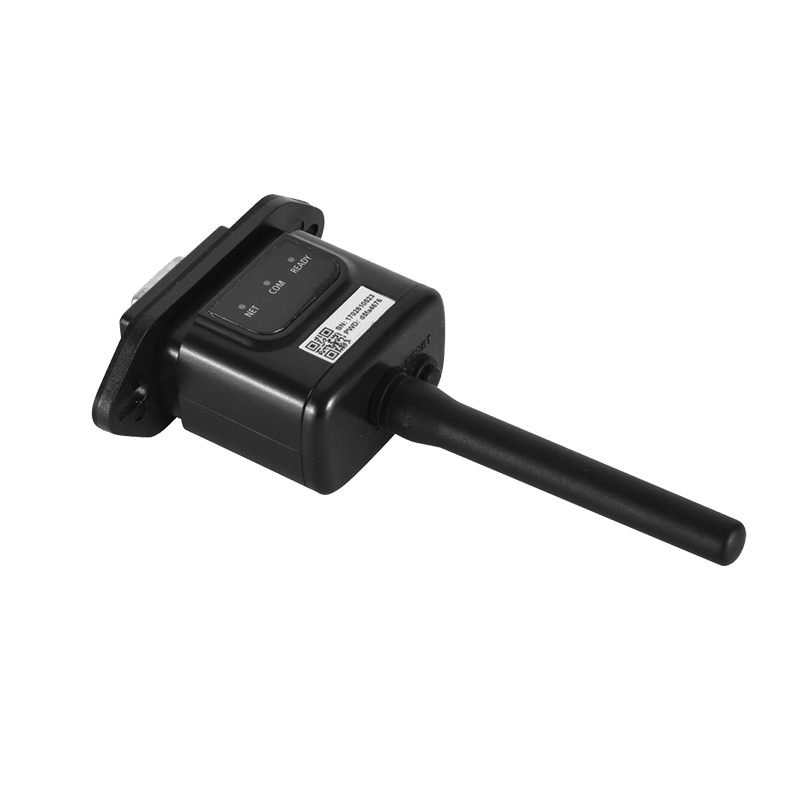
Modern wind turbine grid tie inverters typically include built-in data logging and remote monitoring capabilities via Wi-Fi, Ethernet, or RS485 Modbus communication. These features allow system owners and installers to track energy production, identify performance degradation, and diagnose faults without physical site visits. Key metrics to monitor include daily and cumulative energy yield, MPPT efficiency over time, input voltage and current profiles, and inverter operating temperature. Significant deviations from baseline performance — particularly declining yield at similar wind conditions — are early indicators of developing faults in either the inverter or the turbine generator.
The expected operational lifespan of a quality wind grid tie inverter is typically 10 to 15 years, with electrolytic capacitors being the common wear component. Some manufacturers offer capacitor replacement kits or refurbishment services to extend inverter life beyond this window, which is economically important given that the wind turbine mechanical components — blades, tower, bearings — may have design lives of 20 years or more. Selecting inverters from manufacturers with strong local support, documented spare parts availability, and clear warranty terms significantly reduces long-term operational risk for wind energy installations of any scale.